What to Know Before Buying Country Property in Upstate NY

HomesFarmsAndLand
Author
What to Know Before You Buy Country Property in Upstate NY
Zoning, septic, wells, and legal road access are the four things that quietly decide whether a piece of land works. Here's how to check each one before you're under contract.

The view sells the property. The septic, the well, and the road decide whether you can actually live here.
Almost nobody gets burned out here by the thing they were worried about. They get burned by the soil that won't perc, the deed that never granted a right of way, or the town road the highway department stops plowing at the last mailbox. This is the checklist we wish somebody had handed us.
Plenty of towns out here have no zoning at all
City buyers usually arrive expecting a zoning map, a planning department, and a permit counter. In a lot of our rural towns, none of that exists. New York gives land use authority to the town, not the county — and a good number of towns across Otsego, Delaware, Schoharie, and Chenango have simply never adopted a zoning code. Others adopted one twenty years ago and enforce it lightly. Two neighboring towns can be completely different animals.
That cuts both ways, and you should be honest with yourself about which side you're on. No zoning means no zoning board, no permit counter, and no site-plan hearing for basic things — you can put up a pole barn, run a small business out of the shop, or keep chickens without anyone signing off. Splitting off a lot to gift to your kid also skips New York's state subdivision review, since that only applies to lots being sold. But it's not a total free-for-all: some towns still have their own subdivision or lot-line rules on the books even without zoning, and any new house will need a septic/well permit and possibly a new driveway permit, so a quick call to the town clerk is worth it before you assume anything. It also means the parcel across the road can do the same thing — a gravel operation, a shooting range, a trailer, a solar array. There's no map protecting your view.
"No zoning" almost never means "no rules." Nearly every town still enforces the NYS Uniform Fire Prevention and Building Code through a local code enforcement officer, and many have standalone laws covering junk vehicles, mobile homes, short-term rentals, solar, or timber harvesting that live outside any zoning ordinance. Call the town clerk and ask two questions: does this town have zoning, and what local laws apply to what I want to do?
The other thing worth checking early: whether the parcel sits inside a county-adopted agricultural district. If it does, New York's Real Property Law § 333-c requires the seller to give you a signed disclosure notice when the contract is submitted, stating plainly that farming here "may include, but not be limited to, activities that cause noise, dust and odors." That notice is not a warning label. It's the state telling you the tractor at 5 a.m. and the manure spreader in April are protected activity, and you are the one who moved in next to it.
The soil decides what you can build
This is the one that surprises people the most, and it's the one that kills the most deals. There is no municipal sewer on a hillside in Roseboom. Your house treats its own wastewater, on your own land, and New York sets the rules for how in Appendix 75-A of the State Sanitary Code. If the ground can't meet those standards, the number of bedrooms you can build shrinks — or the lot doesn't support a house at all.
Two tests answer the question. A deep hole test digs down at least six feet to see what's under you: how far to bedrock, how far to seasonal high groundwater, whether there's a hardpan layer. A percolation test — at least two holes on the site — measures how fast water actually moves through that soil. You want a rate between one and sixty minutes per inch. Faster than one minute per inch and the effluent runs straight through without treating; slower than sixty and it won't move at all.
Run those numbers against a real parcel and you start to see why the pretty spot isn't always the buildable spot. A knoll with ledge two feet down is out. A flat bottom near the creek needs 100 feet of clearance from the water and 100 feet from your own well, on ground that's often the wettest on the property. Steep shale hillsides — which is most of what we've got — frequently perc slowly and need an engineered or raised system instead of a conventional trench field. That's a real cost difference, and it's worth knowing before you write the offer, not after.
Buying an existing house instead of raw land? Different questions, same urgency. Ask when the system was installed, when the tank was last pumped, whether there's a permit and an as-built diagram on file, and how many bedrooms the system was designed for. A three-bedroom house on a two-bedroom system is a problem you inherit. Get it inspected and, if you can, get it dye-tested — a standard home inspection does not tell you whether a leach field is failing.
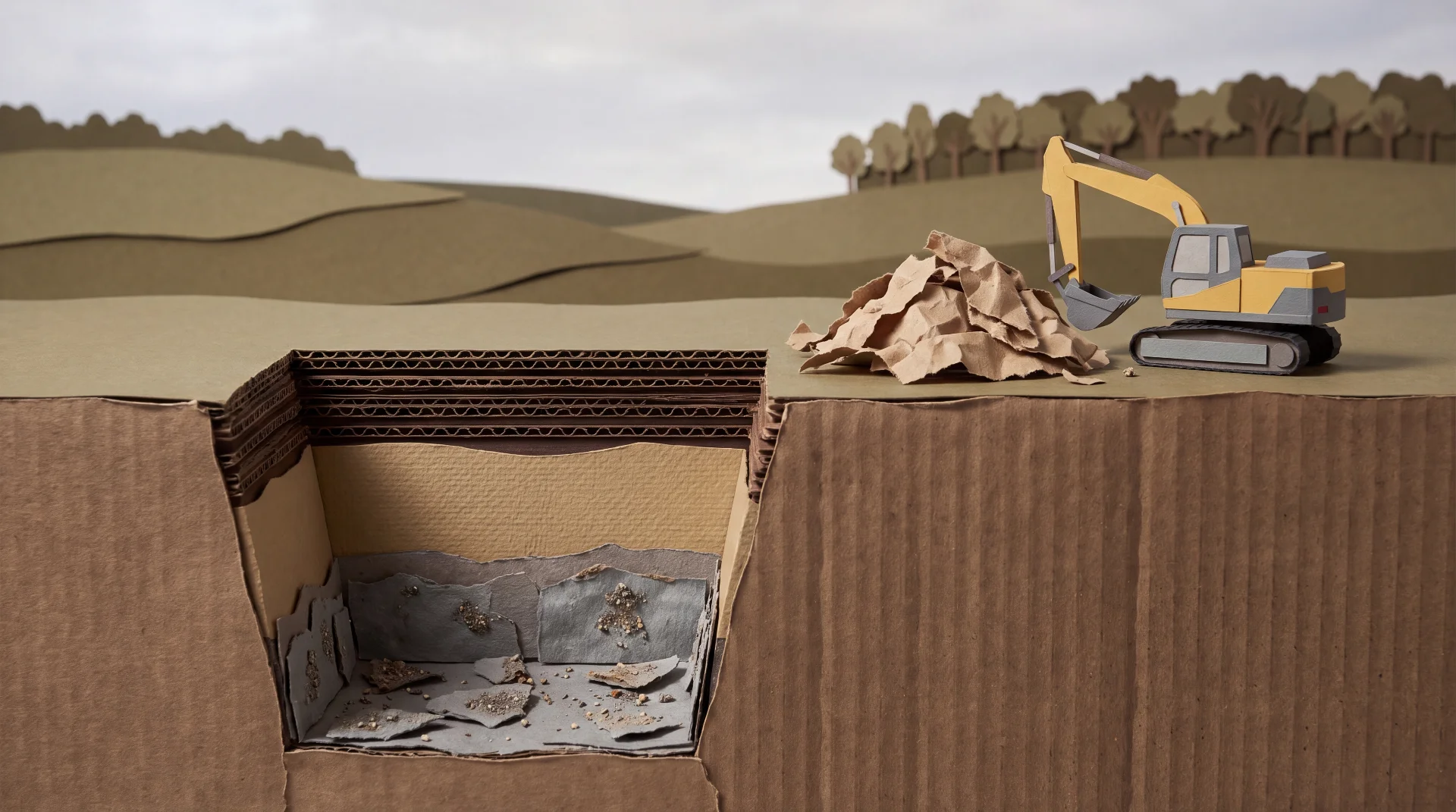
Six feet down is where you find out what a property is really worth.
Nobody is testing your well but you
Out here your water comes from a drilled well, a dug well, or a spring, and no public utility is monitoring any of them. The State Health Department recommends testing a private well for bacteria at least once a year and for other contaminants every three to five years — but that is a recommendation, not a requirement, and in most of our towns nobody is checking. If a well hasn't been tested in a decade, that's not unusual. It just means you need to.
Make well testing a contingency in your offer, and test for more than coliform. Around here we'd want coliform bacteria and E. coli, plus arsenic, lead, nitrates, iron, manganese, hardness, and pH. Arsenic occurs naturally in bedrock across parts of Upstate New York and it has no taste or smell — the only way to know is a lab result. Most of what you find is treatable with the right filtration; what you can't fix after closing is not having known.
Ask about yield too, in gallons per minute, and ask whether the well has ever run dry in a dry August. Ask for the well log if one exists — depth, casing, static level. And when you're drilling new, use a contractor registered with the NYS DEC's Water Well Contractor Program; registration is required in New York, and a registered driller files the well completion report that becomes the permanent record for that well.
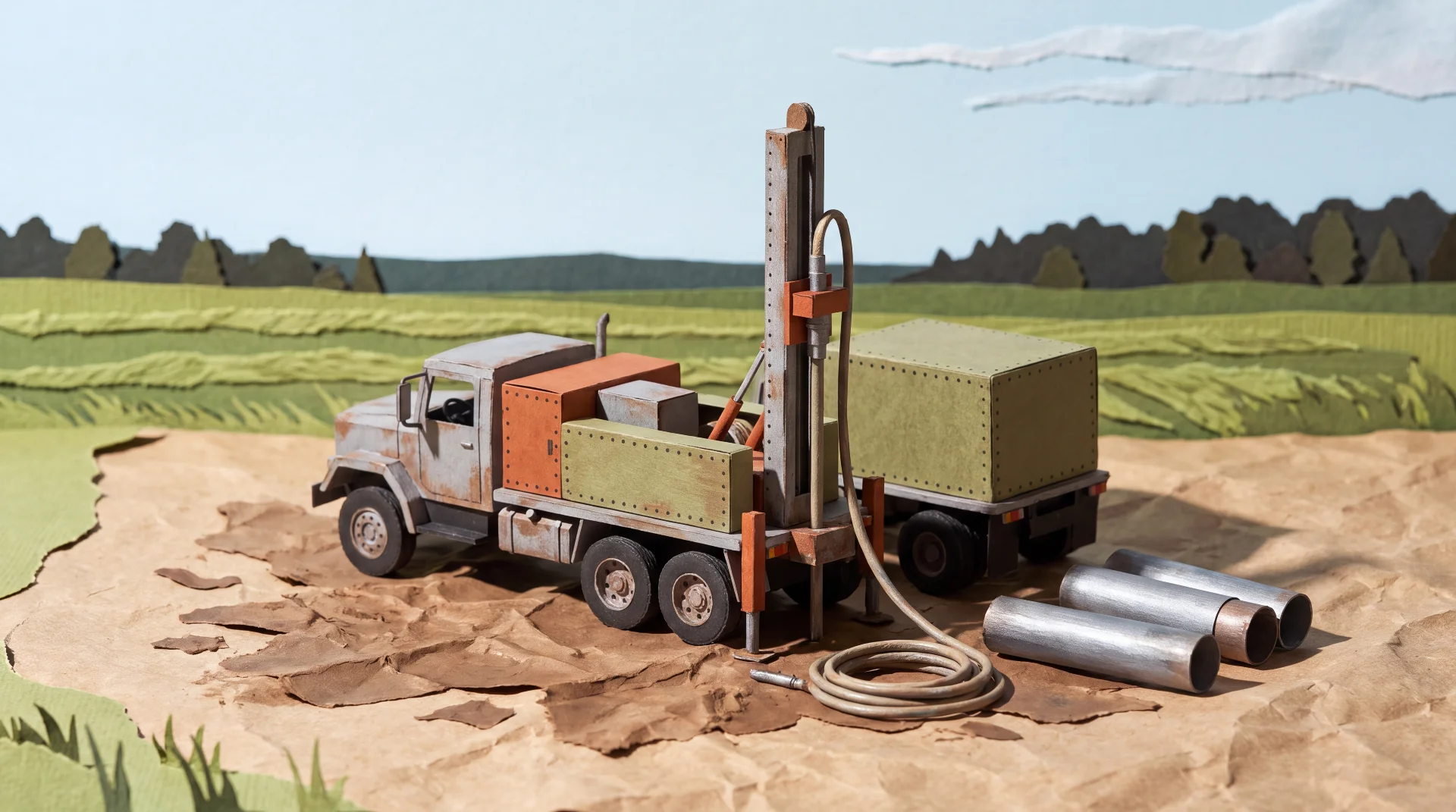
A new drilled well is a real line item. Budget for it before you fall in love with the view.
The last quarter mile costs more than you think
A listing that says "utilities at the road" is telling you something real, but it isn't telling you what the run costs. Getting electric from the pole at the road to a building site 800 feet back through a hedgerow means poles, or trenching, and a design charge from the utility. It is entirely normal for that number to land in five figures. Call the utility yourself with the tax map number and ask for a preliminary estimate — they'll do it, and it takes one phone call to turn an unknown into a budget line.
Natural gas mostly doesn't exist out here. Heat is propane, oil, wood, or a cold-climate heat pump, and most of the houses we sell run some combination of two of those. That's not a downside so much as a different set of choices — a woodstove and eight cords a year is a genuinely good life if you like splitting wood, and a miserable one if you don't.
Internet is the one that decides whether you can work from here. It has improved a lot — New York's ConnectALL initiative is putting roughly a billion dollars into broadband buildout, and fiber has reached hamlets that had nothing five years ago — but it is still genuinely road by road. Don't trust a coverage map. Get the exact address, call the providers, and ask the neighbors what they actually have. Low-earth-orbit satellite has become the real fallback for the properties fiber hasn't reached yet, and for a lot of remote-work buyers it's what makes the move possible at all.
 Every pole between the road and your building site is a number. Ask for it early.
Can you get to it legally — and in February?
There are two separate access questions, and buyers routinely answer one and forget the other. The first is legal: does your deed actually grant you a right to reach the parcel? Plenty of back land out here is reached by a two-track that everyone has used for forty years without a recorded easement anywhere. "Everyone has always used it" is a conversation, not a property right. If the access crosses someone else's land, you want a deeded, recorded easement naming a width and a maintenance obligation — and you want your attorney and title company to confirm it before closing, not after.
The second is practical, and it's the one that separates people who last out here from people who list in three years. Ask the town highway superintendent — by name, they'll talk to you — where the plow route ends on that road, whether the road is maintained year round, and whether any stretch is designated seasonal use. Some towns have adopted local laws designating certain roads as seasonal or minimum maintenance, which means no plowing and no winter upkeep. A camp at the end of one is a fine camp. It is a hard place to get a school bus, an oil truck, or an ambulance to in January.
Under New York's realty subdivision law, splitting a tract into five or more residential lots of five acres or less within any three-year period requires Health Department approval before the map can be filed. County clerks can only accept plans stamped by the DOH office with jurisdiction. If you're buying a lot out of a recent split — or planning to split land yourself later — confirm the subdivision was properly approved. An unapproved lot can be very hard to finance and very hard to resell.
While you're in the deed, read the rest of it. Utility easements, gas and mineral rights, timber rights, hunting leases, and rights of way for a neighbor's woodlot all live in the chain of title and all of them survive your closing. None of it is necessarily a dealbreaker. All of it is worth knowing.
 Visit the property in the worst month, not the best one.
The wetlands map is no longer the whole story
This one changed recently and a lot of buyers — and honestly a lot of agents — haven't caught up. For decades, if a wetland wasn't drawn on the state's Freshwater Wetlands Map, DEC didn't regulate it. As of January 1, 2025, that's over. Those maps are now labeled "Previously Mapped Freshwater Wetlands," and DEC's jurisdiction reaches wetlands regardless of whether they appear on a map.
The current threshold is wetlands of at least 12.4 acres, plus any wetland designated as being of unusual importance, and it drops to 7.4 acres on January 1, 2028. Regulation also extends to a 100-foot adjacent area measured out from the wetland edge — which is the part that actually bites, because that buffer can sit right where you wanted the house. The only way to know for certain is to request a jurisdictional determination from DEC. It's an online request, DEC generally responds within 90 days, and the letter is good for five years. On a raw land purchase where you're planning to build, that's a contingency worth writing into the contract.
Flooding deserves its own look, especially along the Susquehanna, the Unadilla, the Schoharie, and every creek that feeds them. Since March 20, 2024, New York sellers can no longer buy their way out of the Property Condition Disclosure Statement with a $500 credit — the form is mandatory, and it now includes eight flood-specific questions covering FEMA flood zone designation, flood insurance requirements, prior flood damage, past federal disaster assistance, and previous claims. Read those answers carefully. Then pull the FEMA map yourself, and ask a neighbor who's been there thirty years where the water goes.
 Regulated wetland rarely looks like a swamp. Often it just looks like a low spot in the hayfield.
The programs that quietly cut your tax bill
New York property taxes are not a secret, and we're not going to pretend they're low. What a lot of buyers don't realize is that acreage in New York has its own tax programs, and if you're buying land you should know whether the parcel is already in one — because that status transfers with the property, and so can the penalty for pulling it out.
Agricultural assessment is the big one. Land used in a farm operation can be assessed at its agricultural value rather than market value if you have at least seven acres in production and average $10,000 or more in annual agricultural sales over the preceding two years. Under seven acres, the threshold jumps to $50,000 in annual sales. Rented land counts when there's a documented lease of five years or more, so the neighbor haying your field can qualify you. Convert that land to a non-agricultural use later and you may owe back payments covering the previous five to eight years of savings.
If your acreage is woods rather than fields, look at 480-a Forest Tax Law instead. It requires at least 50 contiguous acres of forest, a management plan prepared by a forester, and a rolling ten-year commitment renewed annually. The exemption is capped, the paperwork is real, and there are rollback taxes if you break the commitment or subdivide below 50 acres during it. For the right woodlot owner it's excellent; for someone who might sell in five years it's a trap. Talk to a consulting forester before you commit.
And if the property will be your primary residence, file for STAR — and file for it yourself, promptly, because it does not carry over from the prior owner. New buyers register with the NYS Tax Department for the STAR credit rather than inheriting the old exemption on the assessment roll.
The part every generic land guide gets wrong
National blogs tell you to "contact your county health department about the septic." Here, that advice sends you to the wrong phone number in most of our territory. New York classifies counties as full-service or partial-service, and it matters enormously which one you're standing in.
Otsego and Delaware are partial-service counties. Neither one permits septic systems locally. Both refer onsite wastewater, private wells, and realty subdivision review to the NYS Department of Health Oneonta District Office at 28 Hill Street, Suite 201 in Oneonta — (607) 432-3911. Otsego County's own Environmental Health page says it plainly: their office does not issue those permits.
Schoharie County runs its own program. Its Environmental Health Division issues sewage disposal permits, conducts inspections, and provides technical assistance to homeowners and contractors directly. Same state code, different front door — and one county line between them.
Two more numbers worth having. For anything you build, the town code enforcement officer is your permit authority even in towns with no zoning — find them through the town clerk. And if you're buying in the parts of Delaware and Schoharie counties inside the New York City watershed, the Catskill Watershed Corporation reimburses up to 100% of approved costs to repair or replace a failing septic system at a primary residence that's at least 20 years old. That is a meaningful amount of money attached to specific towns, and most buyers have never heard of it.
The buyers who struggle out here aren't the ones who asked too many questions. They're the ones who fell in love in October and never came back in March. Drive the road in bad weather. Stand on the building site in mud season. If you still want it then, you're going to be happy here for thirty years.
The offices that actually decide things
NYSDOH Oneonta District Office
28 Hill Street, Suite 201, Oneonta, NY 13820 · (607) 432-3911. Handles onsite wastewater permits, private water supply questions, and realty subdivision review for these partial-service counties.
District office listSchoharie County Environmental Health
Schoharie runs its own program, issuing sewage disposal permits, conducting inspections, and providing technical assistance to homeowners, contractors, and design professionals.
County siteNYS DEC Freshwater Wetlands Program
Where you request a jurisdictional determination — the only way to confirm whether a regulated wetland or its 100-foot adjacent area sits on your parcel. Determinations are valid for five years.
DEC wetlandsCatskill Watershed Corporation
Reimburses up to 100% of approved repair or replacement costs for failing septic systems at primary residences 20 years or older in eligible towns of Delaware, Schoharie, Greene, Ulster, and Sullivan counties.
Program detailsNYS DEC 480-a Forest Tax Law
Program requirements, the certificate application, the annual commitment form, and the rollback rules for 50-plus contiguous acres of managed forest land.
480-a programZoning — many rural towns here have none; the building code and local laws still apply.
Septic — deep hole and perc test before you commit; 4 feet of usable soil, 1–60 min/in, 100-foot separations.
Water — test the well for bacteria, arsenic, lead, and nitrates as a contract contingency.
Utilities — get a written estimate for the run from the road; verify internet address by address.
Access — deeded easement in writing, and confirm the road is plowed year round.
Wetlands — the map is no longer the last word; request a DEC jurisdictional determination.
None of this is meant to talk you out of it. We moved here, we did most of these things the hard way, and we'd do it again tomorrow. Country property is more forgiving than people fear and less forgiving than the listing photos suggest — the difference is entirely in what you check before you sign.
If you want privacy, room to build, and a place where the loudest thing at night is the creek, this is the right corner of New York for it. If you need the driveway plowed by 6 a.m. and the internet never to blink, be honest about that now and let's find you something closer to the village. Both are good answers. The wrong answer is guessing.
What people ask us
Do I need a perc test before I buy raw land in Upstate NY?
If you plan to build, yes — and ideally as a contract contingency rather than after closing. New York's Appendix 75-A requires at least two percolation tests and a deep hole test at least six feet deep to design a conventional system. Soil that percs slower than 60 minutes per inch or has less than four feet of usable soil above bedrock or groundwater won't support a standard trench field, which means an engineered system and a bigger budget.
Who issues septic permits in Otsego County, NY?
Not the county. Otsego and Delaware are partial-service counties, and both refer septic, well, and realty subdivision matters to the NYS Department of Health Oneonta District Office at 28 Hill Street, Suite 201, Oneonta, NY 13820, (607) 432-3911. Schoharie County, by contrast, permits and inspects onsite wastewater systems through its own Environmental Health Division.
Is well water testing required when buying a home in New York?
Statewide, no — a few counties have local testing laws, but across most of our region it's on you. The State Health Department recommends testing private wells for bacteria annually and for other contaminants every three to five years. Make it a contingency and test for coliform and E. coli plus arsenic, lead, nitrates, iron, manganese, hardness, and pH.
Can I build anything I want if the town has no zoning?
No. Even with no zoning code, the NYS Uniform Fire Prevention and Building Code applies and is enforced by a local code enforcement officer, and many towns have standalone local laws on mobile homes, junkyards, solar, short-term rentals, or timber harvesting. Septic approval, wetlands jurisdiction, and floodplain rules apply regardless of zoning. Call the town clerk before you assume.
What does it mean if the property is in an agricultural district?
It means state law protects normal farm activity around you, and that the seller must give you a signed disclosure notice at contract under Real Property Law § 333-c acknowledging that farming may cause noise, dust, and odors. It may also mean the parcel carries an agricultural assessment. If it does, ask what happens to that assessment when you take title and whether converting the land triggers payback of prior savings.
Your place out here is waiting
Send us the address or the listing link and we'll walk the checklist with you — who to call for the septic, whether the road is plowed, what the neighbors know. Honest, local, no pressure.
Start the conversationKevin Lucero · Team Lead, Homes, Farms & Land · 17+ Years · 500+ Families Served · 11K+ YouTube subscribers
 Do the homework first. Then enjoy every evening like this one.
Homes, Farms & Land is not a licensed appraisal or legal advisory firm. Property data is compiled from the Otsego-Delaware Board of REALTORS®, Homes.com, and Zillow, and is believed accurate but not guaranteed. Verify all figures independently before making a purchase decision.
This article is general information about New York State and local requirements as of August 2026, not legal, engineering, tax, or financial advice. Regulations, thresholds, program eligibility, and office jurisdictions change. Confirm every requirement with the governing agency and consult a licensed attorney, engineer, surveyor, or tax professional before relying on anything here in a real estate transaction.
Government agencies, programs, and organizations named in this article are referenced for the reader's convenience only. We have no affiliation, sponsorship, or financial relationship with any of them unless otherwise stated.
Tagged
Keep Reading
Hand-picked articles you might enjoy next.
 Buying Guides
What Smart Buyers Do With One Showing
Only get one chance to see a property? Here's how Upstate NY buyers prepare for a single showing and leave with everything they need to make an offer.
 Communities & Lifestyle
Fireworks & Summer Fun in Otsego, Schoharie & Chenango
From fireworks over Otsego Lake to the Sunshine Fair and Norwich's fairgrounds show, here's where to celebrate summer across three Upstate NY counties.
 Selling & Market
148,000+ Eyes on Your Upstate NY Listing Every Month
Selling a home, farm, or land in Upstate NY? See how HFL puts each listing in front of 148K+ monthly buyer touchpoints across six channels.