What the Upstate NY Market Is Actually Doing Right Now

HomesFarmsAndLand
Author
What the Upstate NY Market Is Actually Doing Right Now
No headlines, no doom scroll, no guesswork. The real numbers from Schoharie, Otsego, and the counties around them, and what they mean if you're buying or selling this fall.
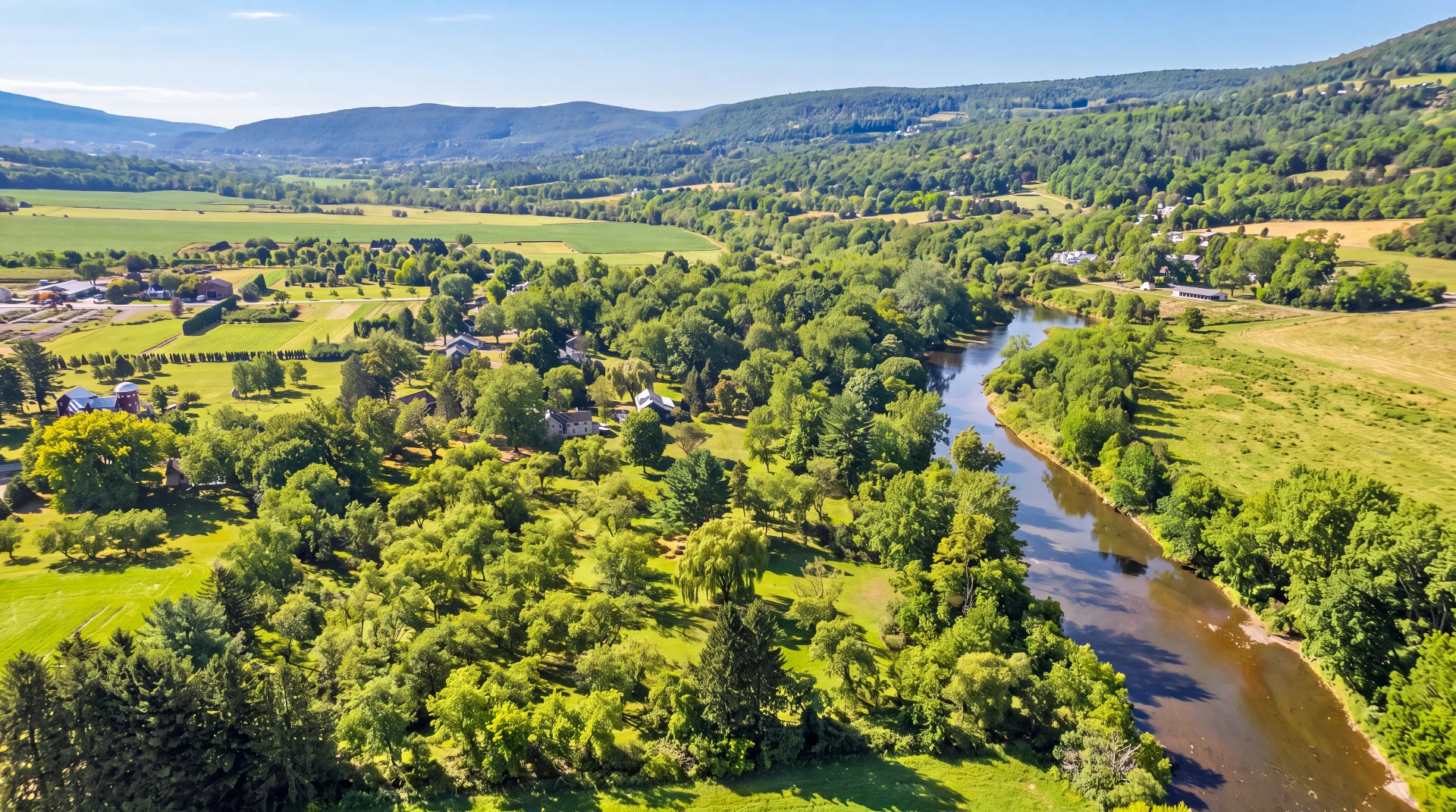 Late summer in the Schoharie Valley — the market we live in, not the one on cable news.
Everyone has an opinion about this market. Your neighbor, a Facebook group, a chatbot, a Zestimate. Almost none of it comes with a source. So here's our promise for the next five minutes: every number in this post is real, dated, and checkable, and we'll show you exactly where to verify it yourself. That's how we do market updates at Homes, Farms and Land.
There are more homes for sale — and it's still not enough
Here's the number nobody on Facebook is quoting: New York's for-sale inventory has now grown for 17 straight months, hitting 33,585 homes in July, the most on the market since September 2022, according to the New York State Association of REALTORS®. New listings were up 3.2% over last July. Sellers are coming back.
And yet, out here, on the ground, a well-priced farmhouse on decent acreage still draws a crowd. Why? Because "more inventory" statewide doesn't mean more of what rural buyers actually want. There is no factory producing 1890s farmhouses on ten acres with a good well and a barn that doesn't lean. When one hits the market priced right, it doesn't care what the statewide supply number says.
What the growing inventory does change: buyers have alternatives now. The overpriced listing that would've sold anyway in 2021 just sits, because three doors down the road there's finally something else to look at. Inventory didn't kill demand. It killed wishful pricing.
Buyers didn't disappear — they got calculators
Closed sales across New York were up 4.5% this July over last. Pending sales rose too. That is not a market where buyers went home. It's a market where they show up pre-approved, payment-first, and with a spreadsheet open.
With 30-year rates parked in the mid-6s all summer, today's buyer doesn't think in list price. They think in monthly payments. A $20,000 difference in price is roughly $130 a month at these rates, and they know it before they ever call us. The buyer pool out here is also broader than people assume: local families moving up, downstate and out-of-state buyers chasing land and elbow room, and homesteaders who found the Catskill foothills on YouTube at midnight. They're careful. They're comparing. But they're very real, and when the right property shows up, they move.
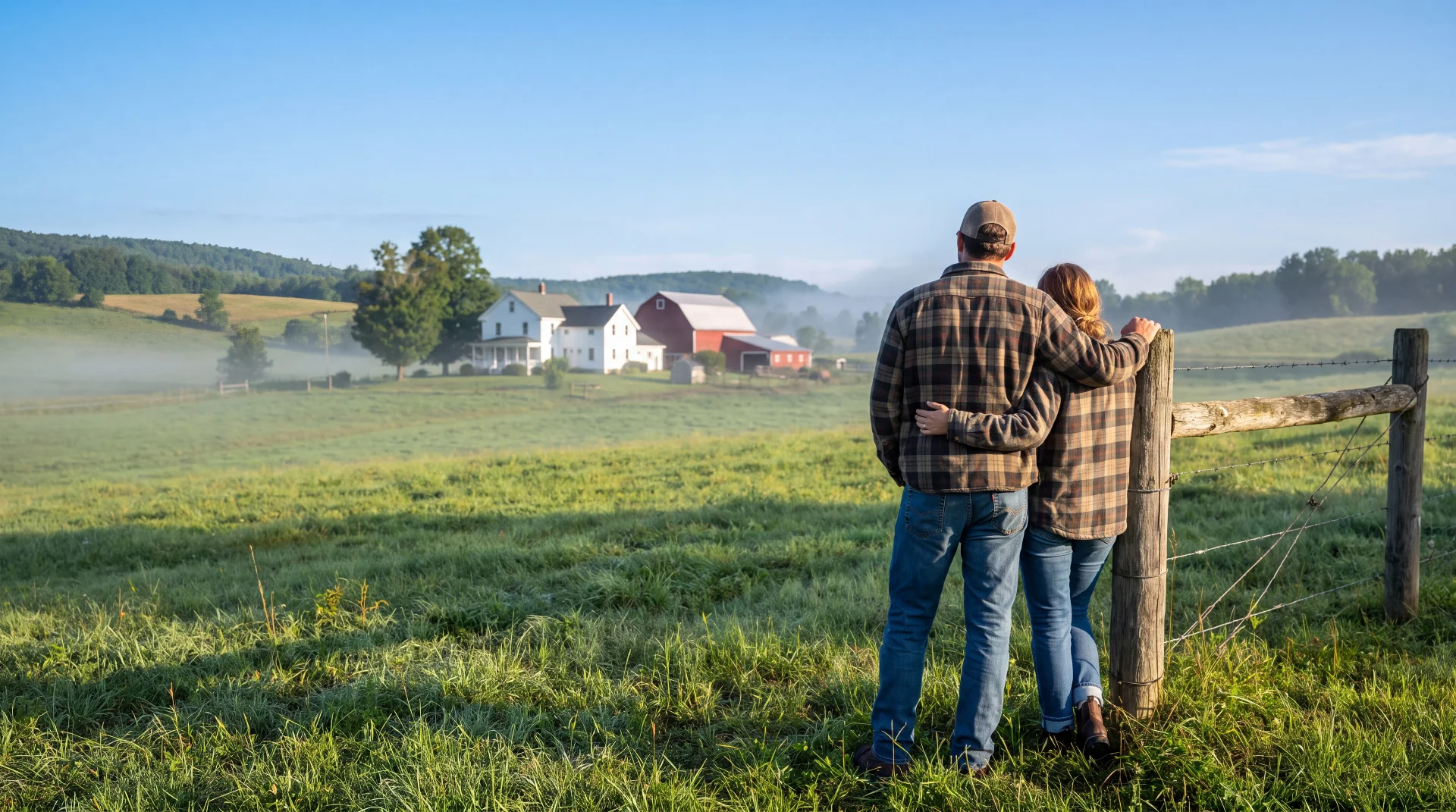 Today's buyers are payment-conscious and picky — and still very much out looking.
2021 math is dead. Here's what replaced it.
The most expensive sentence in real estate right now: "The place down the road got $340K two years ago, so we'll ask $390K." Buyers with a growing inventory to choose from and a mortgage calculator in their pocket will simply skip your showing. Then the price cut comes, and the listing carries a "reduced" flag that makes buyers wonder what's wrong with it. Overpricing doesn't get you more; in this market, it reliably gets you less, slower.
What replaced 2021 math is evidence: what actually closed on your road, in your school district, in your condition, in the last six months, adjusted for the acreage, the outbuildings, the well, the septic, the things a national algorithm can't see from space. That's the pricing conversation we have with sellers, and it's why our listings don't sit.
That number isn't a slogan; it's from the Otsego-Delaware MLS's own 2026 ranking report. Pricing correctly and marketing hard doesn't mean pricing low. Done right, it's how you end up above the market average, not below it.
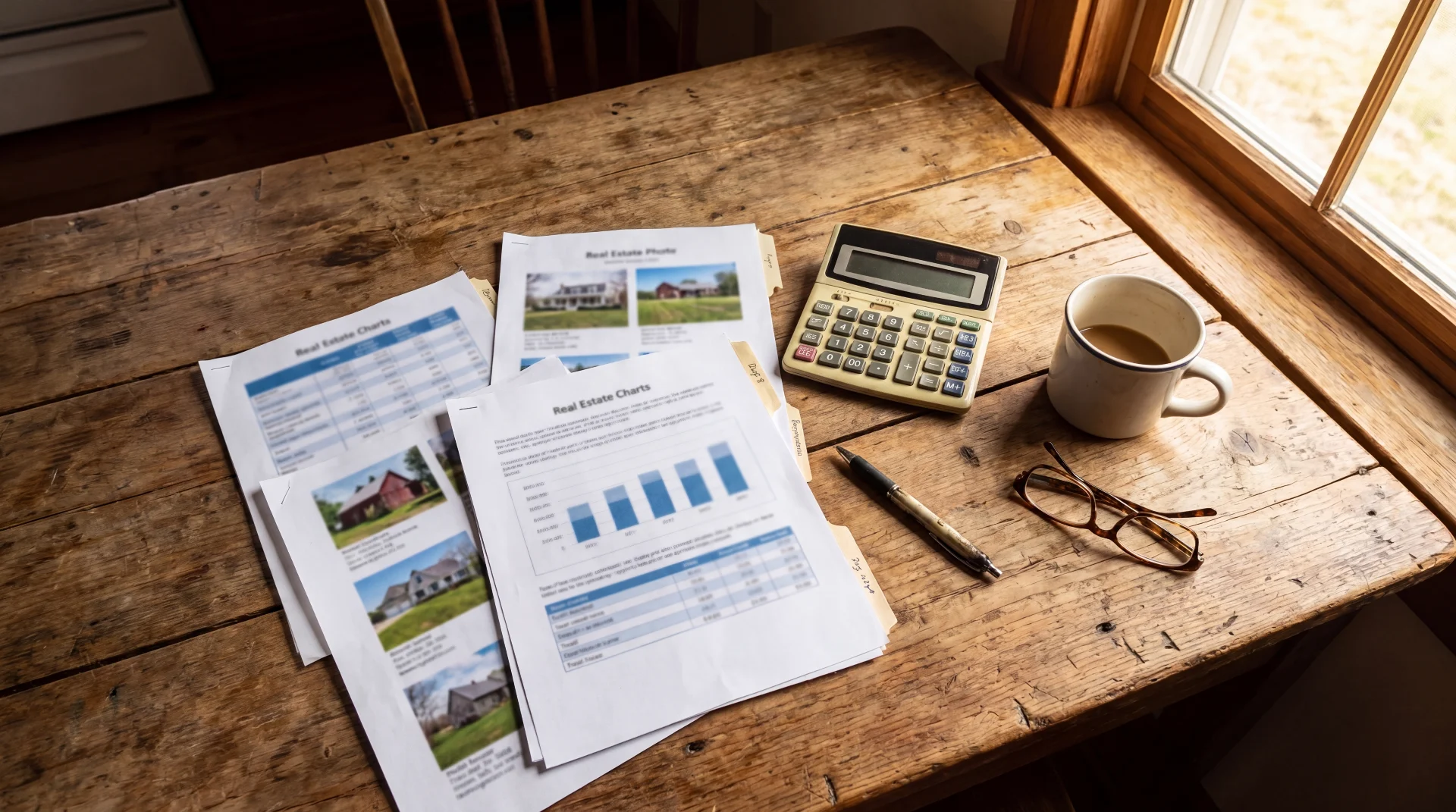 Evidence, not nostalgia — pricing starts with what actually closed near you.
Your first showing happens on a phone screen
A buyer coming from Long Island, New Jersey, or Connecticut decides whether your property is worth a three-hour drive based entirely on what they see online. Dark cell-phone photos of a beautiful farm cost that seller real money; the buyer who would have loved it never got in the car.
This is why we don't outsource it. Every Homes, Farms & Land listing gets professional photography, drone aerials that show the actual acreage and boundaries, and a full walkthrough video on a YouTube channel with over 11,000 subscribers who are specifically watching for rural Upstate New York properties. When the land is the product, you have to show it, not describe it. In a market where buyers compare closely, presentation isn't a nice-to-have. It's the difference between a showing request and a scroll-past.
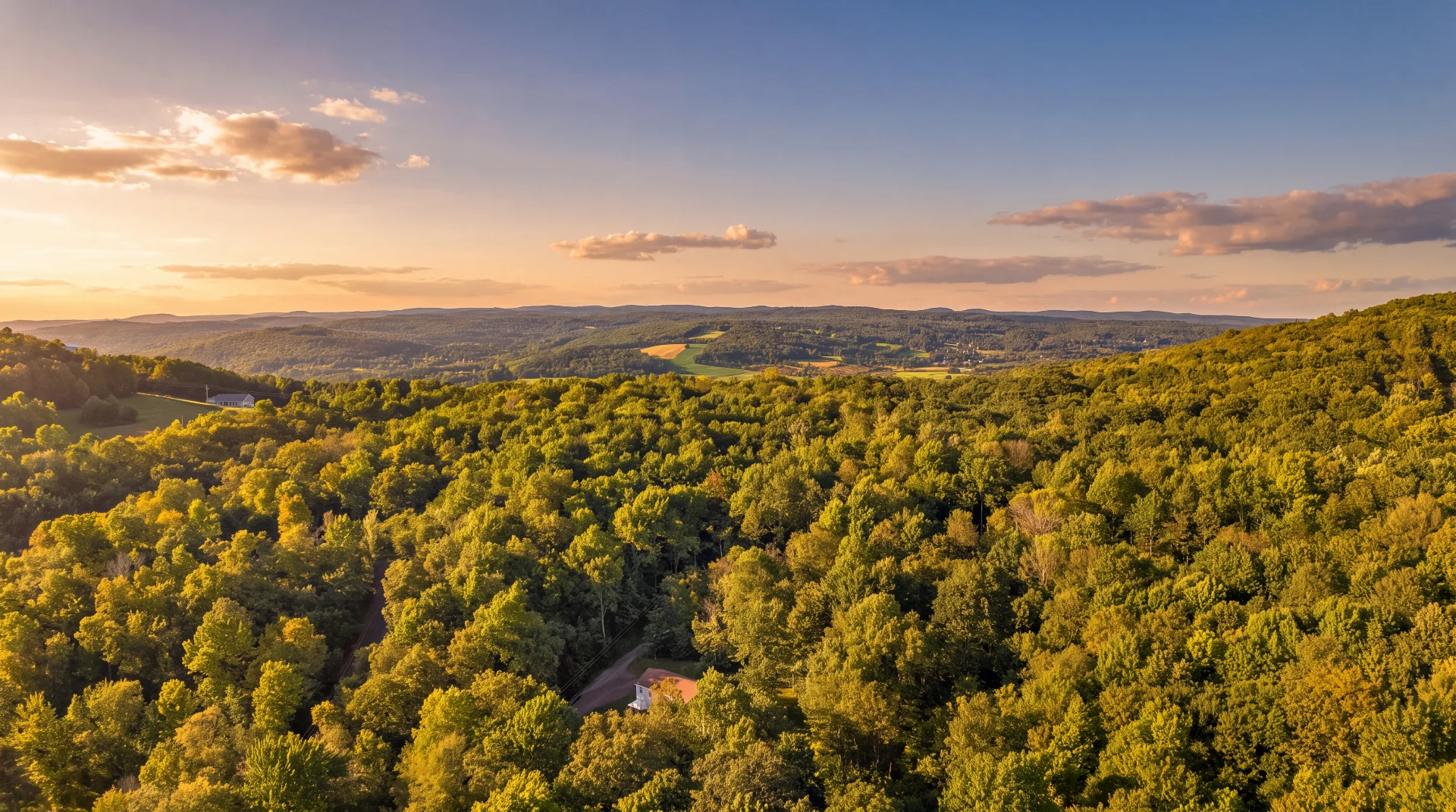
When acreage is the product, buyers need to see all of it — that's what the drone is for.
"List it and wait" is over. Negotiation is back.
For a couple of years there, deals mostly negotiated themselves. Not anymore. Today's transactions are built in the middle: inspection findings, repair credits, closing-cost concessions, occupancy dates, what stays with the property. On rural deals, add the layers a suburban agent never touches: well flow and water tests, septic inspections, right-of-way and easement questions, agricultural exemptions that transfer (or don't), boundary lines that haven't been walked since the Nixon administration.
None of that is bad news. A negotiated deal that closes beats a "clean" deal that dies in attorney review. But it does mean the person representing you needs to have done this, recently, around here, on properties like yours. This is where experience quietly earns its commission.
There is no "the market." There's your road.
Want proof that county-level headlines can't price your property? Two counties that share a border, right now: Zillow puts Schoharie County's typical home value around $210,000, up about 4.1% over the past year. Next door in Otsego County, Realtor.com data shows median list prices per square foot climbing while several months in the past year saw median sale prices swing double digits in both directions, because in a county where a slow month means a few dozen closings, two farm sales or two fixer-uppers can move the whole "market" statistic.
Now go smaller. A village home in Cobleskill walkable to Main Street, a hunting parcel in Jefferson, a horse property outside Cooperstown, and an off-grid cabin in Gilboa are four different markets with four different buyer pools, four different financing realities, and four different price behaviors, in the same headline "market." A Zestimate is a starting point for a conversation. It is not a price. The algorithm has never smelled fresh paint, never noticed the neighbor's junkyard, and never once walked a boundary line.
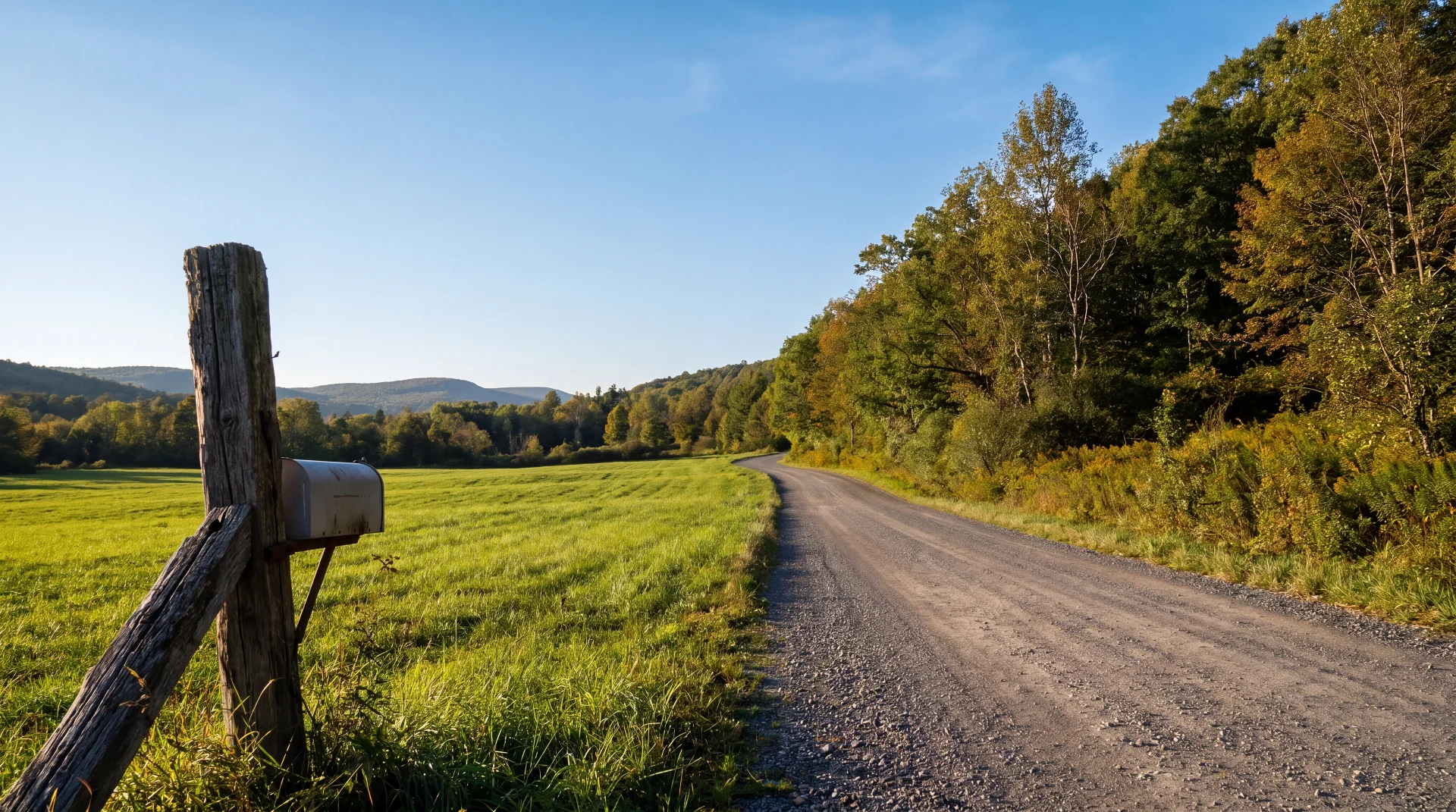
There is no "the market." There's this road — and the last three sales on it.
The sellers having a rough year are the ones pricing off a memory. The sellers having a great year are the ones pricing off evidence and marketing as they mean it. Same market. The market isn't the variable; the strategy is.
Check the numbers yourself
A market update that asks you to just trust it isn't worth much. Here's where every figure in this post came from; bookmark them and check us anytime.
NYSAR Monthly Housing Report
The New York State Association of REALTORS® publishes closed sales, pending sales, new listings, and inventory every month. This is where the 33,585-home inventory figure lives.
NYSAR Market DataFreddie Mac Primary Mortgage Market Survey
The industry-standard weekly average for the 30-year fixed rate. If you want to know what rates are actually doing, not what a headline says, start here, then get a real quote from a local lender.
Weekly Rate SurveyFRED — Federal Reserve Economic Data
Free county-level housing data from Realtor.com, hosted by the St. Louis Fed, median list prices, price per square foot, and days on market for Otsego, Schoharie, Delaware, and every county we serve.
Search Your CountyHomes, Farms & Land on YouTube
Want to see what's actually selling around here and what it looks like? Every one of our listings gets a full video tour. It's the most honest market data there is: real properties, real prices, real roads.
Watch the ChannelInventory is at its highest since 2022 — but the good rural stuff is still scarce.
Buyers are active, pre-approved, and shopping by monthly payment, not list price.
Rates have held in the mid-6s all summer; nobody should plan around a fantasy rate.
Overpricing now costs sellers time and money — the data punishes it fast.
Presentation is the new curb appeal: your first showing happens on a phone.
County medians can't price your property. Comparable sales on your road can.
This is a normal market, the first one in years. Normal means sellers who price on evidence and market aggressively do very well, and sellers who price on nostalgia sit. It means buyers finally have choices and time to think, but the genuinely good properties still won't wait for them. Neither the doom headlines nor the hype are telling you the truth, because the truth is smaller than a headline: it's what's happening on your road, in your price band, this season.
And the honest part: if the numbers say waiting serves you better, we'll tell you that too. We live here. We'll still be here when you're ready.
Questions we're actually getting right now
Is it a good time to sell in Upstate NY?
For a well-presented, correctly priced property, yes. Statewide closed sales rose 4.5% this July over last, buyer demand for rural homes and land remains steady, and the properties that struggle are almost always struggling on price or presentation, not on the market itself.
Should buyers wait for mortgage rates to drop?
Rates have sat in the mid-6% range through the summer of 2026, and major forecasters expect roughly the same into 2027. Waiting for a dramatic drop is a bet, not a plan, and if rates do fall meaningfully, buyer competition rises with it. Most buyers do better buying the right property at a payment they can afford, with the option to refinance later. Talk to a licensed lender about your specific numbers.
Why is my Zestimate so different from what my agent says?
Automated estimates work best in neighborhoods full of similar houses selling often. Rural Upstate NY is the opposite: unique properties, mixed acreage, outbuildings, wells, septics, and thin sales data. On properties like these, the algorithm is guessing, sometimes high, sometimes low, sometimes wildly. Use it as one data point, then get a real comparable-sales analysis for your specific property.
Are home prices in Schoharie and Otsego County going up or down?
Broadly up, modestly. Zillow shows Schoharie County values up about 4.1% over the past year, but monthly county numbers swing hard in both directions because so few homes sell each month. One month of data here is noise. The trend, and the comparable sales for your specific type of property, are what matter.
What's the biggest mistake sellers are making right now?
Anchoring to 2021–2022 prices and treating marketing as optional. Buyers now have inventory to compare against and payment calculators in hand. The listings winning this market are priced on current comparable sales and presented with professional photos, drone footage, and video, because the first showing happens online, every time.
Want to know what YOUR property is actually worth right now?
Not a Zestimate. Not a guess. A real comparable-sales conversation about your road, your acreage, your timing, and an honest answer even if that answer is "wait."
Start the ConversationKevin Lucero · Lic. Real Estate Salesperson & Team Lead, Homes, Farms & Land at Charlotteville Realty
A top-5 agent in the Otsego-Delaware MLS (2026) · 220+ closed sales, $41M+ volume in the past 5 years
(607) 282-6242 · kevin@homesfarmsandland.com
Markets shift. Porch lights in the Catskill foothills stay on. Your place out here is waiting.
Homes, Farms & Land is not a licensed appraisal or legal advisory firm. Market statistics cited in this post come from the New York State Association of REALTORS® (July 2026 housing report), Zillow, Realtor.com data via the Federal Reserve Bank of St. Louis (FRED), the Otsego-Delaware Board of REALTORS®, and published national mortgage-rate surveys as of August 2026, and are believed accurate but not guaranteed. Market conditions and mortgage rates change; verify all figures independently, and consult a licensed lender or attorney for financing and legal questions before making a purchase or sale decision.
Tagged
Keep Reading
Hand-picked articles you might enjoy next.
 Land & Building
What to Know Before Buying Country Property in Upstate NY
Zoning, septic, wells and legal road access decide whether Upstate NY land works. The checklist for Otsego, Delaware and Schoharie county buyers.
 Communities & Lifestyle
Fireworks & Summer Fun in Otsego, Schoharie & Chenango
From fireworks over Otsego Lake to the Sunshine Fair and Norwich's fairgrounds show, here's where to celebrate summer across three Upstate NY counties.
 Selling & Market
148,000+ Eyes on Your Upstate NY Listing Every Month
Selling a home, farm, or land in Upstate NY? See how HFL puts each listing in front of 148K+ monthly buyer touchpoints across six channels.