How to Get Pre-Approved for a Mortgage in Upstate NY

HomesFarmsAndLand
Author
If you are thinking about buying a home in Upstate New York, the very first thing you should do, before you start browsing listings, before you attend an open house, before you fall in love with a property, is get pre-approved for a mortgage.
Pre-approval is not just a formality. It is the step that tells you exactly what you can afford, what loan programs you qualify for, and how strong your position will be when you are ready to make an offer. In a market where well-priced homes can attract multiple offers quickly, walking in with a pre-approval letter can be the difference between getting the house and losing it to someone who came prepared.
Here is a step-by-step breakdown of how the pre-approval process works, what you will need to gather, and how to set yourself up for success.

Getting pre-approved is the first real step toward owning a home.
Pre-Qualification vs. Pre-Approval: What Is the Difference?
These two terms sound similar, but they carry very different weight. Pre-qualification is a quick, informal estimate based on information you provide to a lender about your income, debts, and assets. It gives you a ballpark idea of what you might be able to borrow, but it is not verified and it does not carry much weight with sellers.
Pre-approval is a deeper process. The lender pulls your credit, verifies your income and employment, reviews your assets and debts, and issues a conditional commitment for a specific loan amount. That pre-approval letter is a document you can hand to a seller or their agent that says, "This buyer has been reviewed and is ready to close." In competitive situations, sellers are far more likely to accept an offer backed by a pre-approval than one backed by a pre-qualification alone.
Step 1: Check Your Credit Before Applying
Before you sit down with a lender, take a look at your own credit. You can pull your free annual credit reports from all three bureaus at AnnualCreditReport.com, which is the only federally authorized source for free reports. Review each one for errors, outdated information, or accounts you do not recognize. Disputing errors now can save you headaches later.
Your credit score will play a major role in determining which loan programs you qualify for and what interest rate you will be offered. Here is a general breakdown of where the thresholds sit for the most common loan types:
For conventional loans, a 640 credit score is widely treated as the practical floor for borrowers putting less than 20% down. This is the point where mortgage insurance (MI) approval becomes much more reliable. A 620 score is the absolute minimum for conventional financing, but very few lenders will approve MI at that level with only 3–5% down. If you are in that range, there are strategies that can help. Increasing your down payment to 10–20%, lowering your debt-to-income ratio, building up strong cash reserves, and securing a solid automated underwriting approval can all improve your chances.
To give you a clearer picture of how credit score and down payment work together on a conventional loan:
620 score with 3–5% down: MI approval is often difficult or declined
620 score with 10% or more down: MI approval is sometimes possible
640 or higher with 3–5% down: MI approval is much more common
For other loan types, FHA loans can go as low as 580 with 3.5% down or 500 with 10% down. VA loans have no official minimum set by the VA, but most lenders want at least a 620. USDA loans generally require a 640.
The higher your score, the better your rate, and the less you pay over the life of the loan. If your score needs work, even a few months of focused effort, paying down balances, making every payment on time, and avoiding new credit inquiries, can make a real difference.
Step 2: Gather Your Documents
One of the biggest reasons pre-approval gets delayed is missing paperwork. Having everything organized before you apply can speed up the process significantly. Most lenders will ask for the following:
Pre-Approval Document Checklist
Proof of income: Pay stubs from the last 30 days, W-2 forms from the past two years, and federal tax returns from the past two years
Self-employment income: Two years of tax returns (personal and business), profit and loss statements, and 1099 forms
Asset documentation: Bank statements (checking and savings) from the past two to three months, retirement and investment account statements
Identification: Government-issued photo ID and Social Security number
Rental history: Landlord contact information and proof of on-time rent payments (12 months is common)
Gift funds: If a family member is contributing toward your down payment, a signed gift letter confirming it is not a loan

Having your documents organized before you apply can cut the pre-approval timeline in half.
Step 3: Choose the Right Lender
Not all lenders are the same. Some specialize in certain loan programs. Some offer faster turnaround times. Some are better at communicating and walking you through the process, which matters more than most buyers realize, especially if this is your first time.
When choosing a lender, look for someone who is experienced with the loan programs you are likely to use (FHA, VA, USDA, SONYMA, conventional), who is responsive and willing to answer your questions, and who has a strong track record with buyers in your area. A good lender and a good real estate agent working together can make the entire experience smoother and faster for you.
At HomesFarmsAndLand.com, we work closely with Andrea Kullman at Homestead Funding, a licensed loan originator with over 20 years of mortgage industry experience. Andrea is bilingual (English and Spanish), handles FHA, VA, USDA, conventional, SONYMA, construction, and rehab loan programs, and is known for her commitment to borrower education and fast turnaround. If you need a lender who will take the time to explain every option and get you to the closing table with confidence, Andrea is someone we trust to do that.
Step 4: Submit Your Application
Once you have chosen your lender and gathered your documents, you will complete a formal mortgage application. This is called a Uniform Residential Loan Application, and most lenders allow you to fill it out online. The application asks for detailed information about your employment, income, assets, debts, and the type of property you plan to purchase.
As part of the application, you will authorize the lender to run a hard credit inquiry. This will cause a small, temporary dip in your credit score, typically just a few points. If you are shopping multiple lenders for the best rate, try to do so within a 30 to 45-day window, as credit scoring models generally treat multiple mortgage inquiries during that period as a single inquiry.
Step 5: Receive Your Pre-Approval Letter
If everything checks out, your lender will issue a pre-approval letter. This document outlines the loan amount you are approved for, the estimated interest rate, the loan type, and how long the pre-approval is valid. Most pre-approvals are good for up to four months, while pre-qualifications are typically valid for around 60 days. If you have not found a home before your pre-approval expires, you may need to update your documents and reapply.
Your pre-approval letter is what you will submit alongside your offer when you find the right property. It signals to the seller that you are financially qualified and ready to move forward. In Upstate New York, where the market has become more competitive in recent years, this can give you a meaningful edge.
Pre-approval is not a guarantee of final loan approval. If your financial situation changes between pre-approval and closing, such as a job change, a large purchase on credit, or a drop in your credit score, the lender can revoke the commitment. Keep your finances stable until the deal is done.
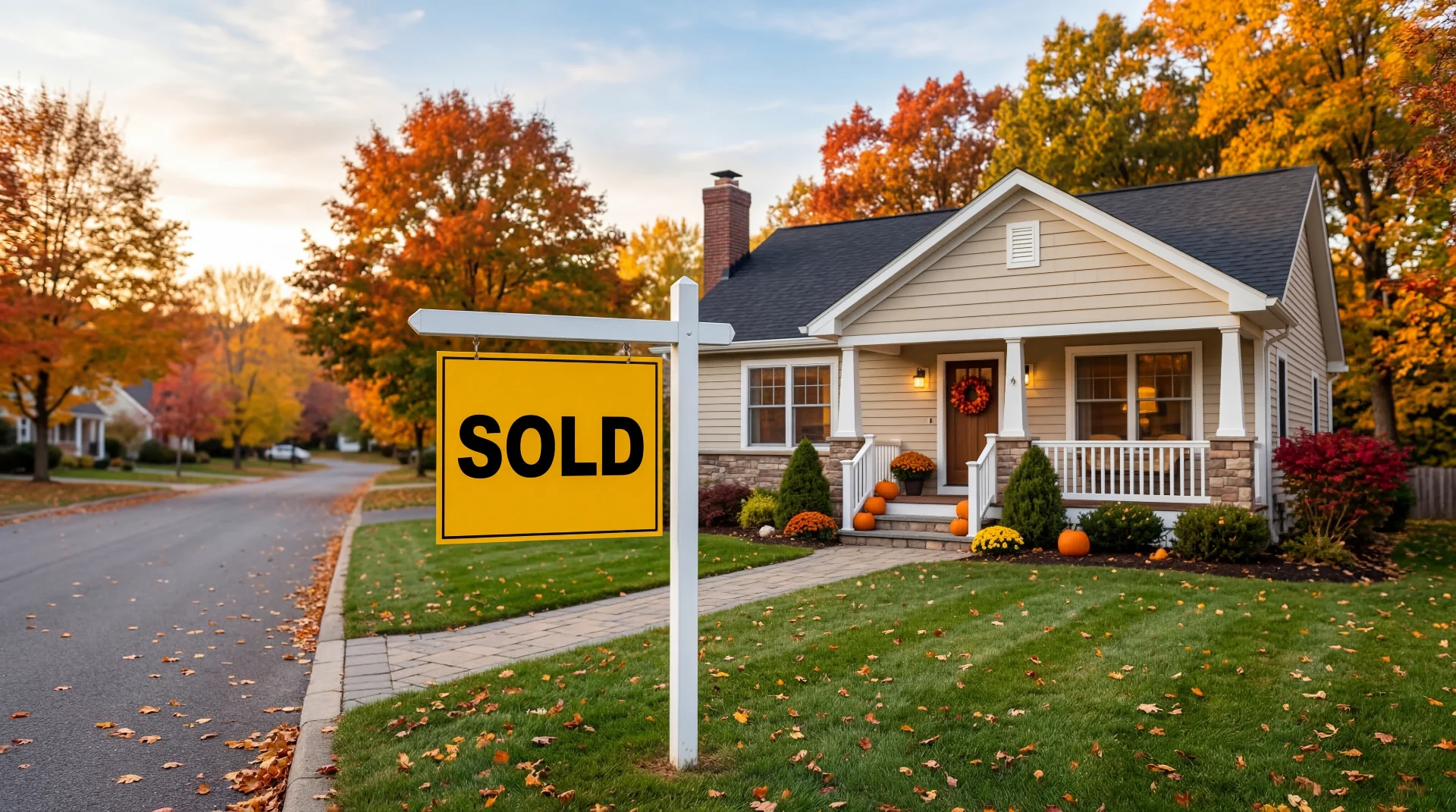
Pre-approved buyers close faster and negotiate from a position of strength.
What to Avoid During the Pre-Approval Process
Once you are in the pre-approval window and especially after you have an accepted offer, there are a few things you should absolutely avoid. Do not open new credit cards or take on new debt. Do not make large deposits into your bank account that you cannot document. Do not change jobs or quit your current position without talking to your lender first. Do not co-sign on anyone else's loan. And do not make large purchases like a car, furniture, or appliances on credit.
Lenders re-verify your credit, income, and employment shortly before closing. Any sudden changes to your financial profile can delay or even cancel your mortgage approval, even if you were pre-approved weeks earlier.
How Long Does Pre-Approval Take?
If you have all of your documents organized and your financial picture is straightforward, many lenders can issue a pre-approval within 24 to 48 hours. More complex situations, such as self-employment income, multiple income sources, or credit issues that need explanation, may take a week or longer. The best thing you can do to speed up the timeline is to be prepared and responsive when your lender asks for additional information.
Why Pre-Approval Matters Even More in Upstate New York
The Upstate New York market has shifted in recent years. Properties in Otsego, Delaware, Chenango, Schoharie, and Greene counties are attracting more interest from remote workers, retirees, and second-home buyers, alongside local families who have always called this region home. Well-priced homes, especially in sought-after areas near Cooperstown, Oneonta, and the northern Catskills, can draw multiple offers within days of listing.
Walking into that situation without a pre-approval puts you at a serious disadvantage. Sellers want certainty. They want to know that the buyer can actually close. A pre-approval letter provides that certainty, and when it comes from a lender with a strong reputation and fast processing, it carries even more weight.
Ready to Get Started?
Start your home search:
Call Kevin Lucero at (607) 282-6242
Visit HomesFarmsAndLand.com
Get pre-approved:
Contact Andrea Jimenez Kullman at Homestead Funding
Phone: (518) 331-9971
Email: akullman@homesteadfunding.com
NMLS #65157
Disclaimer Kevin Lucero and the team at HomesFarmsAndLand.com are licensed real estate agents. We are not mortgage lenders, financial advisors, or credit counselors. The information in this article was compiled for general educational purposes using publicly available resources, including Bankrate.com, Consumer Financial Protection Bureau, and NCHFA. This content should not be considered financial, legal, or lending advice. Andrea Kullman is a licensed loan originator with Homestead Funding Corp (NMLS #3232) and is referenced in this article as a trusted lending partner. Her inclusion does not constitute an endorsement of any specific loan product or guarantee of approval. It is not required to work with us. If you are considering purchasing a home, we encourage you to speak directly with a qualified lender who can evaluate your individual financial situation.
Tagged
Keep Reading
Hand-picked articles you might enjoy next.
 Buying Guides
15 Home-Buying Myths Costing Upstate NY Buyers Real Money
The advice you've heard about buying a home — fact-checked for the Catskill foothills. 15 myths, straight answers, local to Upstate NY.
 Buying Guides
What Smart Buyers Do With One Showing
Only get one chance to see a property? Here's how Upstate NY buyers prepare for a single showing and leave with everything they need to make an offer.
 Market Updates
What the Upstate NY Market Is Actually Doing Right Now
Real August 2026 numbers for Schoharie & Otsego County NY: inventory, prices, rates, and what they mean for buyers and sellers this fall.