2026 Oneonta Guide: Find Your City of the Hills Vibe

HomesFarmsAndLand
Author
The 2026 Oneonta Guide: Which "City of the Hills" Vibe Is Yours?
Four distinct neighborhoods, four completely different lifestyles — and a buyers' market that's finally letting you be picky. Here's the local breakdown that no real estate site will give you.
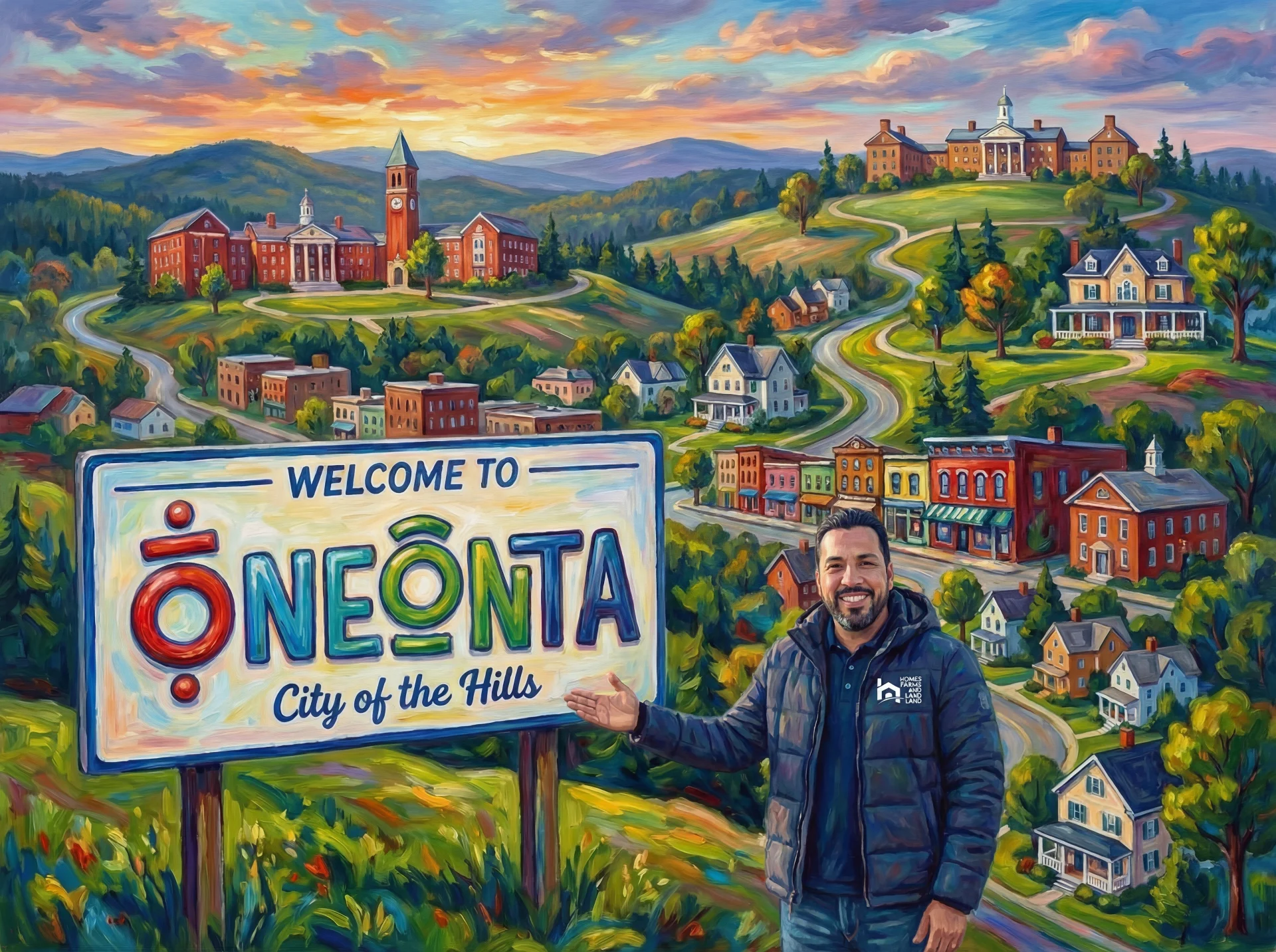
Oneonta — the City of the Hills — has a neighborhood for every kind of buyer in 2026.
So, you're looking at Oneonta. Maybe you're a healthcare professional heading to Bassett, a faculty member joining SUNY Oneonta, or just someone who's watched Hudson Valley prices climb into the stratosphere and thought, "There has to be somewhere with actual soul that I can still afford."
Good news — Oneonta is that place. But here's the thing nobody tells you from a Zillow listing: this town isn't one-size-fits-all. It has distinct neighborhoods with completely different personalities, price points, and tradeoffs. In 2026, with a 91% sale-to-list price ratio, buyers have real leverage here — but only if you know where to look.
We're breaking down the four big players so you can find the corner of Oneonta that actually fits your life.
1. The West End — "The Victorian Heart"
If you close your eyes and picture "small-town Upstate New York" — wraparound porches, towering maples, kids on bicycles, neighbors who actually wave — you're picturing the West End. This is the postcard. This is the dream. And in 2026, it's still one of the best values in the region for what you're getting.
The West End
"The Victorian Heart of Oneonta"
Avg. Price (2026): $215k – $245k
Walkability: High
Architecture: Victorian / Craftsman
School Proximity: Greater Plains Elementary
Best for: Families, walkers, and anyone who wants character over convenience.
The draw here is real — strollers and joggers all day long, a genuine neighborhood feel, and homes with the kind of architectural character that simply doesn't exist in new construction. But let's be honest about the 2026 reality: inventory is tight, and many of these beauties come with 21st-century update needs. We're talking knob-and-tube wiring, old insulation, and the occasional "creative" 1970s renovation you'll want to undo.
If you're the kind of buyer who sees a plaster wall and gets excited rather than intimidated, the West End will reward you handsomely.
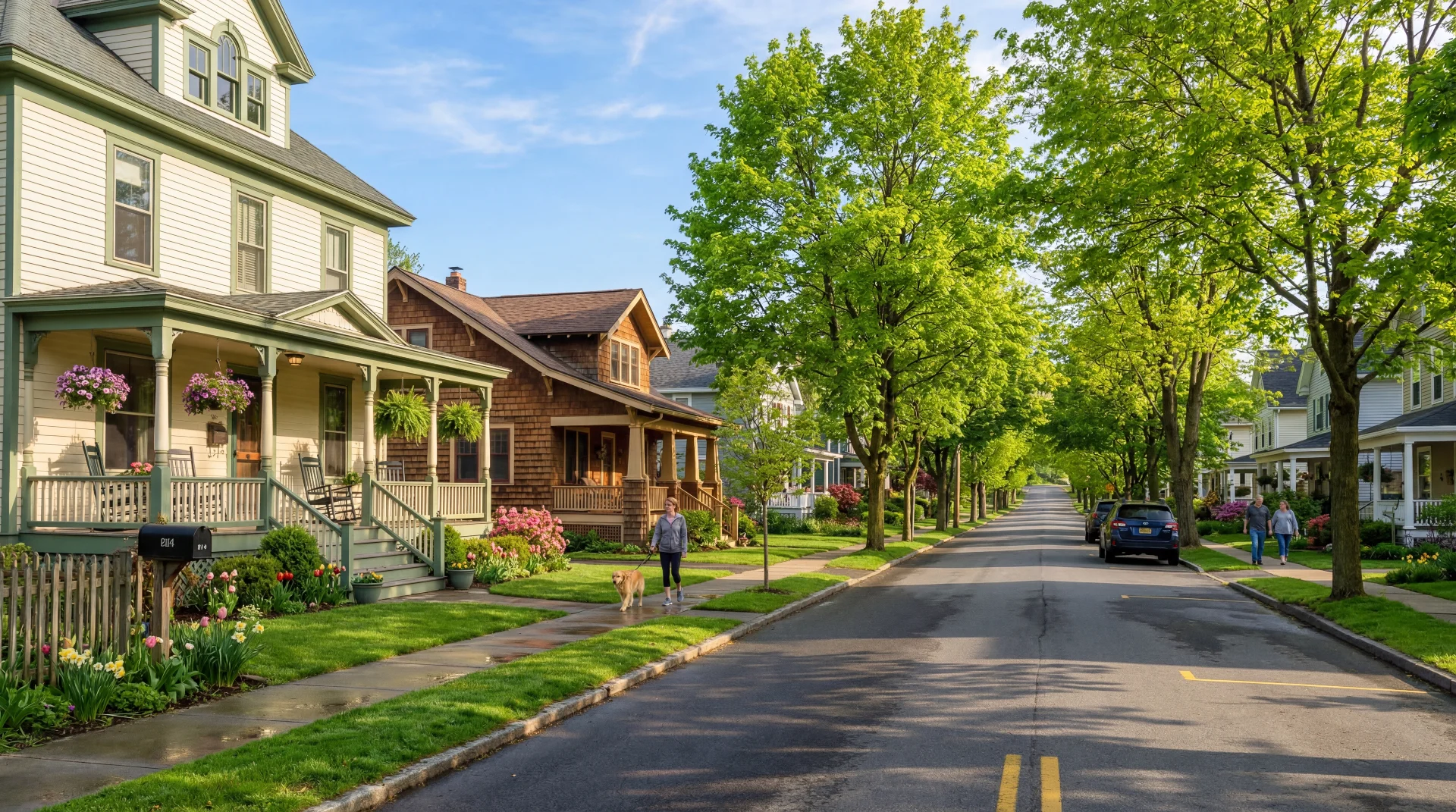
The West End's tree-lined streets and wraparound porches are the definition of small-town charm.
2. Center City & Downtown — "The Urban Pulse"
If you'd told someone five years ago that Oneonta would have "live-work lofts," they'd have laughed. Nobody's laughing now. Center City is in the middle of a genuine transformation — anchored by the 27 Market Street redevelopment — and it's attracting exactly the kind of energy that makes small towns come alive: remote workers, creative entrepreneurs, and people who want their morning coffee and evening dinner to be a short walk apart.
Center City & Downtown
"The Urban Pulse"
Avg. Price (2026): $185k – $210k
Walkability: Very High
Architecture: Multi-unit / Lofts
Key Feature: Live-Work Spaces
Best for: Investors, young professionals, and remote workers who want walkability above all else.
You're steps from Main Street, the Dietz Street Market, and what we'd argue is one of the best cups of coffee in the Southern Tier over at Underground Coffee. The food scene downtown has quietly gotten really good.
The honest caveat: Center City still carries a "SUNY footprint." That means student rentals, the noise that comes with them, and a different energy during the academic year versus summer. If you're buying to live here, look for the quiet pockets tucked just off the main student thoroughfares — they exist, and they're worth finding. If you're buying to invest, those student rentals are a feature, not a bug.
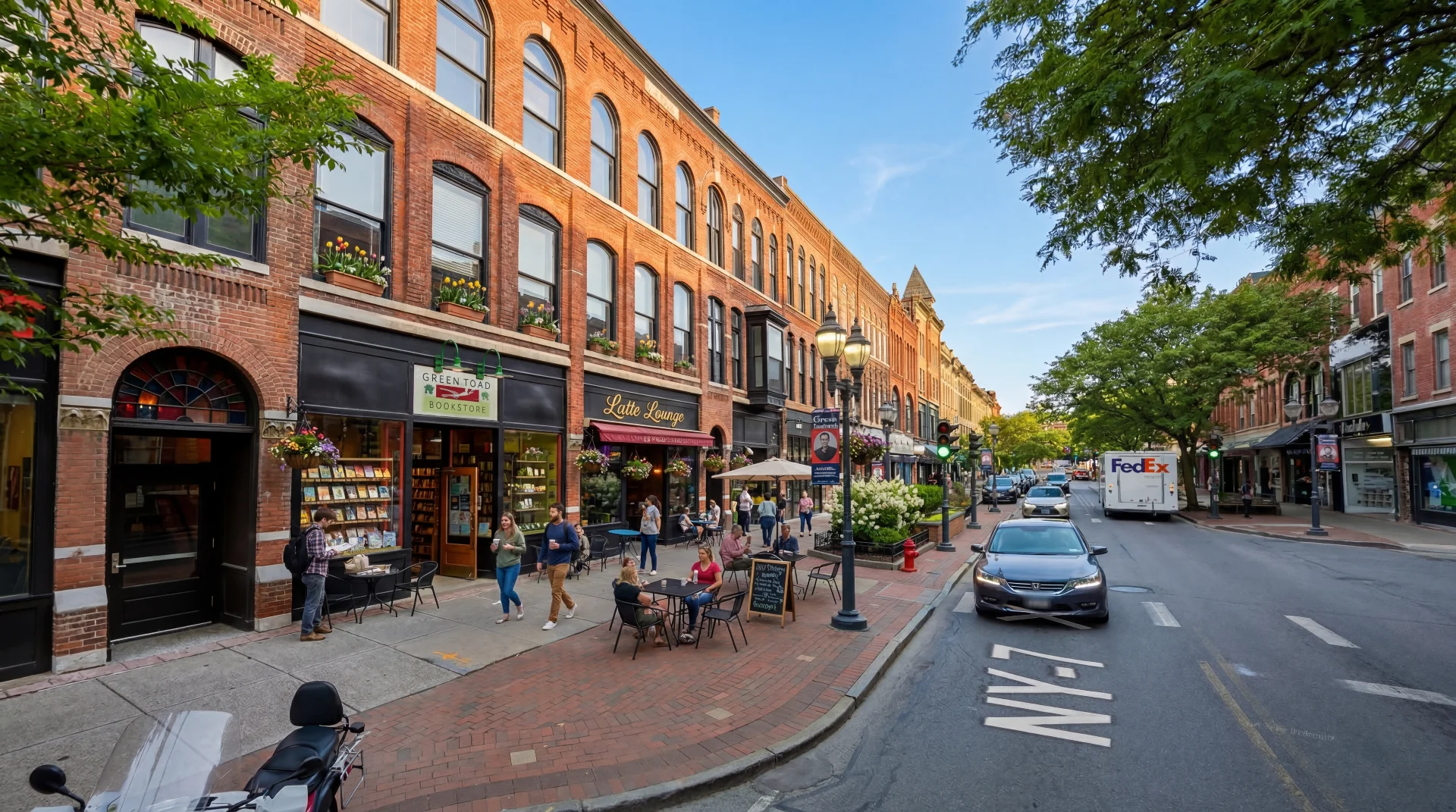
Main Street Oneonta — the heart of the downtown revival.
3. The Town of Oneonta — "The Tax Saver"
Here's where we need to clear up the number one source of confusion for people new to the area: the City of Oneonta and the Town of Oneonta are two different things. The Town wraps around the City like a blanket, and the difference in property taxes is — we kid you not — the single most talked-about topic at every local barbecue, church potluck, and real estate closing in Otsego County.
The Town of Oneonta
"The Tax Saver"
Avg. Price (2026): $250k – $310k
Walkability: Low
Architecture: Ranch / Split-level
Key Feature: Lower Property Taxes
Best for: People who want a two-car garage, a big backyard, and a lower monthly escrow payment.
The trade-off is simple math: Town properties currently average $15k–$20k higher than comparable City homes, but you recoup that through significantly lower annual tax bills. You're paying more at the closing table to pay less every January. For long-term homeowners, the math works out — and it works out well.
The vibe here is suburban-meets-rural. Bigger lots, more privacy, and the kind of "strip mall convenience" that's easy to mock until you realize how nice it is to have a grocery store, a hardware store, and a gas station all within a two-minute drive. You'll trade walkability for breathing room, and for a lot of families, that's a deal worth making.

Town of Oneonta — more space, more privacy, less tax.
4. Chestnut Street & The Historic District — "Grandeur."
And then there's Chestnut Street. If the West End is the Victorian Heart, Chestnut Street is the Victorian throne room. This is where Oneonta's "Grand Dames" live — massive homes with stained glass windows, incredible original woodwork, sweeping staircases, and the kind of craftsmanship that makes modern builders weep with envy.
Chestnut Street & Historic District
"Grandeur"
Avg. Price (2026): $280k – $400k+
Walkability: Medium
Architecture: Historic Mansions
Key Feature: Architectural Masterpieces
Best for: History buffs, established professionals, and anyone who wants a home that's a literal work of art.
These are "forever homes" in every sense. They rarely hit the market, and when they do, they require a buyer who appreciates — and can comfortably afford — the ongoing maintenance of a 120-year-old masterpiece. New roofing on a 4,000-square-foot Victorian isn't a weekend project or a weekend budget.
But if you're the right buyer? There is nothing like walking through your own front door and seeing hand-carved banisters and original stained glass catching the morning light. These homes have stories, and they're looking for someone to write the next chapter.
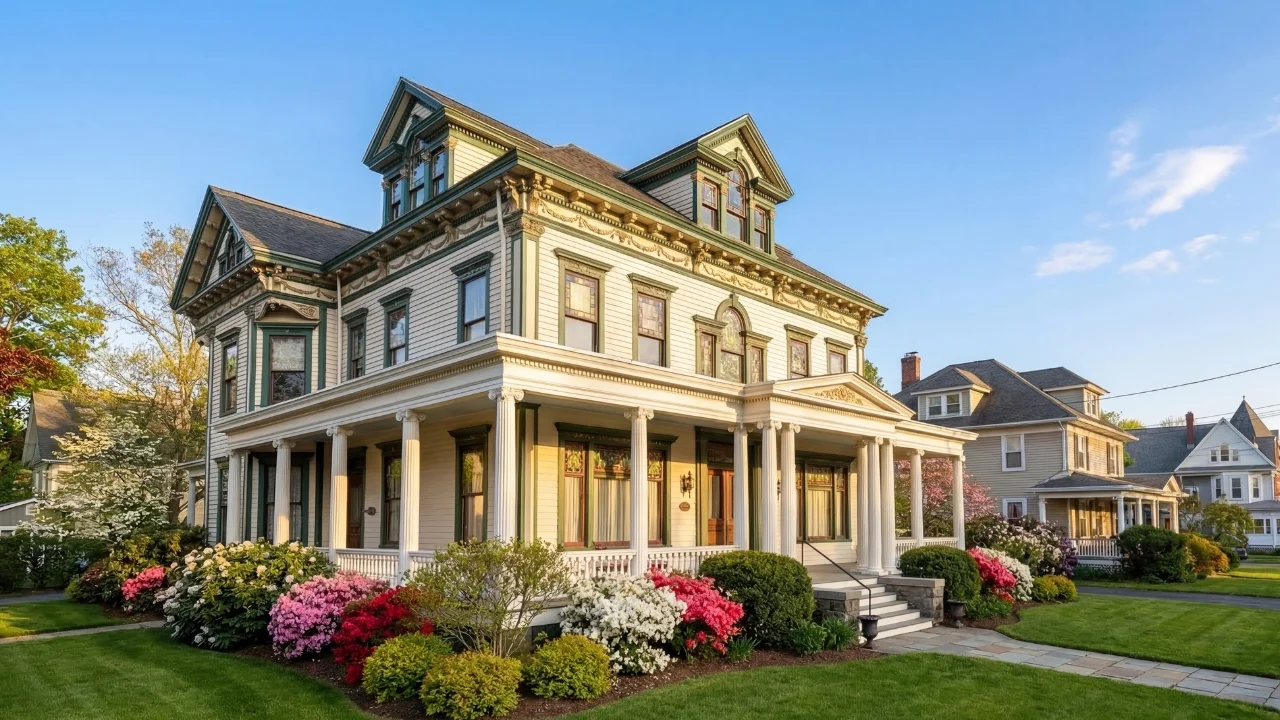
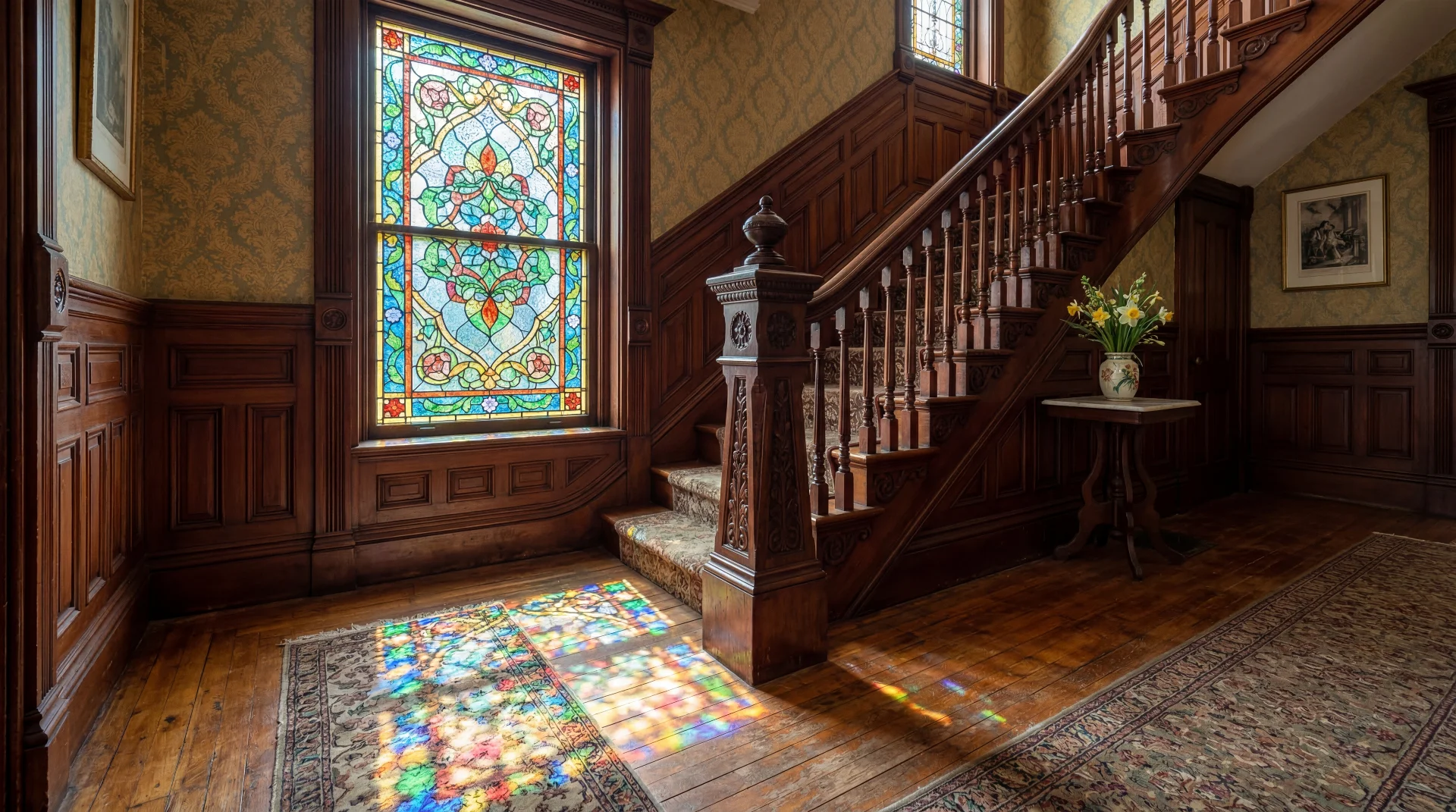
Craftsmanship like this doesn't exist in new construction. Period.
Quick Comparison: Oneonta at a Glance
Here's the side-by-side so you can see how the four neighborhoods stack up. Keep in mind — these are 2026 market estimates, and the right home at the right price can show up in any of these areas.
West End — $215k–$245k | High Walkability | Victorian / Craftsman
Center City — $185k–$210k | Very High Walkability | Multi-unit / Lofts
Town of Oneonta — $250k–$310k | Low Walkability | Ranch / Split-level
Chestnut St. — $280k–$400k+ | Medium Walkability | Historic Mansions
The Bottom Line
Oneonta in 2026 is a buyer's market with real options — but only if you understand the invisible borders that locals know by heart. Whether you want a walkable Victorian street, a downtown loft with morning coffee built into the commute, tax savings in the Town, or a historic masterpiece on Chestnut Street, there's a version of Oneonta waiting for you. The key is knowing which version is yours.
Frequently Asked Questions
Is Oneonta, NY a good place to live in 2026?
Absolutely. With a stable economy anchored by education (SUNY Oneonta, Hartwick College) and healthcare (Bassett Medical Center), plus a quietly growing food and culture scene downtown, Oneonta offers a quality of life that's increasingly hard to find at this price point anywhere in New York State.
What's the difference between the City and Town of Oneonta?
They're two separate municipalities. The City is the walkable, denser core with higher property taxes that fund municipal services (including top-tier snow removal — trust us, that matters). The Town surrounds the City, offers larger lots and lower taxes, but requires a car for most errands. Always ask for a "Tax Map" comparison before making an offer.
What are property taxes like in Oneonta?
City taxes are higher due to municipal services, while Town taxes are significantly lower. This is the single biggest variable in your monthly payment and the reason the Town's purchase prices run $15k–$20k higher than similar City homes — buyers are paying up front for long-term savings.
Is Oneonta good for remote workers?
Increasingly, yes. The Center City area is seeing renovated live-work loft spaces, and broadband access has improved significantly. If you're working remotely and want a low cost of living with a real community around you, Oneonta should be on your short list.
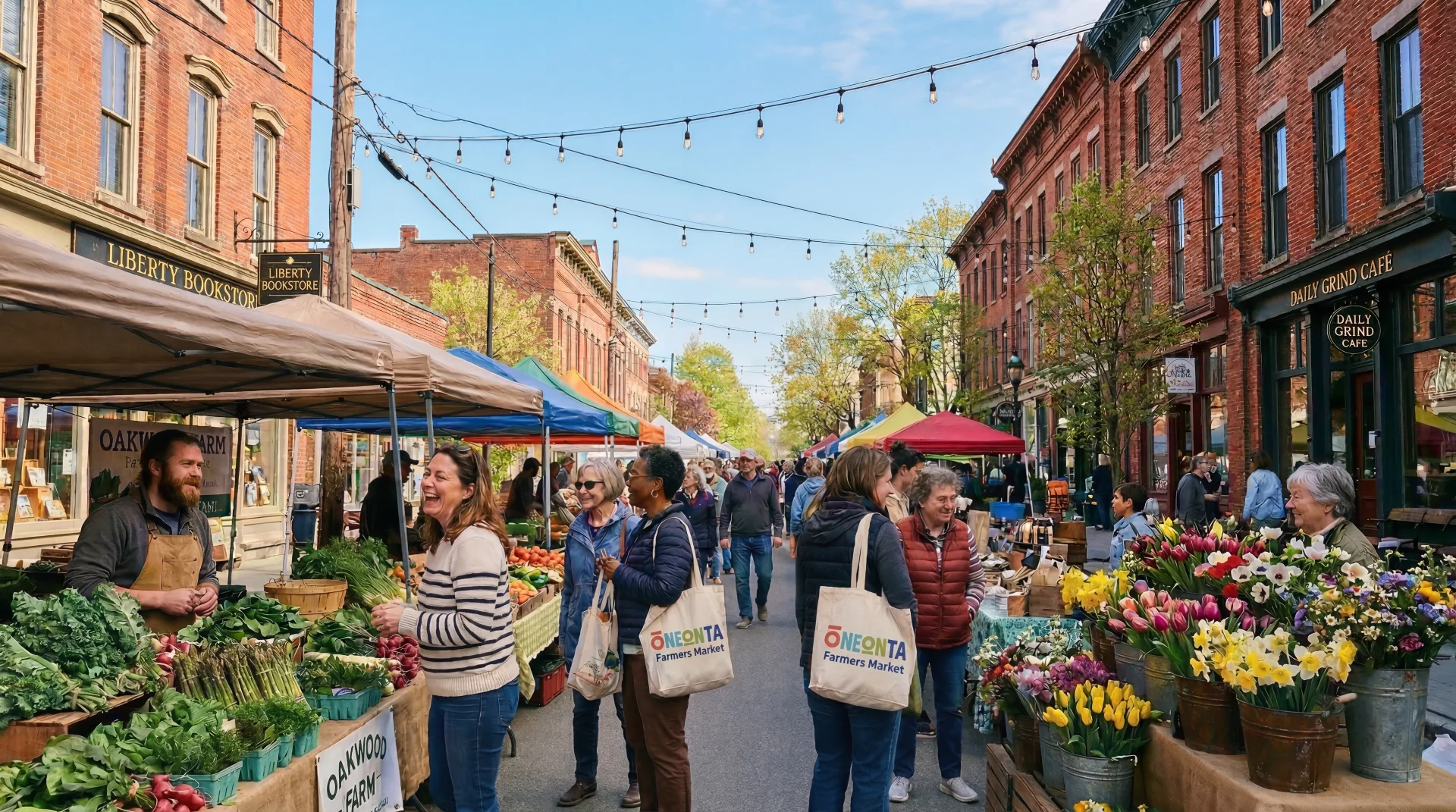
Oneonta's community spirit is the thing no listing can capture — but every resident feels.
Ready to Find Your Oneonta?
We've been through the process of finding our place in the hills — and we're here to help you do the same. Explore our latest listings, guides, and resources for buying in Upstate New York.
EXPLORE HOMES FARMS AND LAND →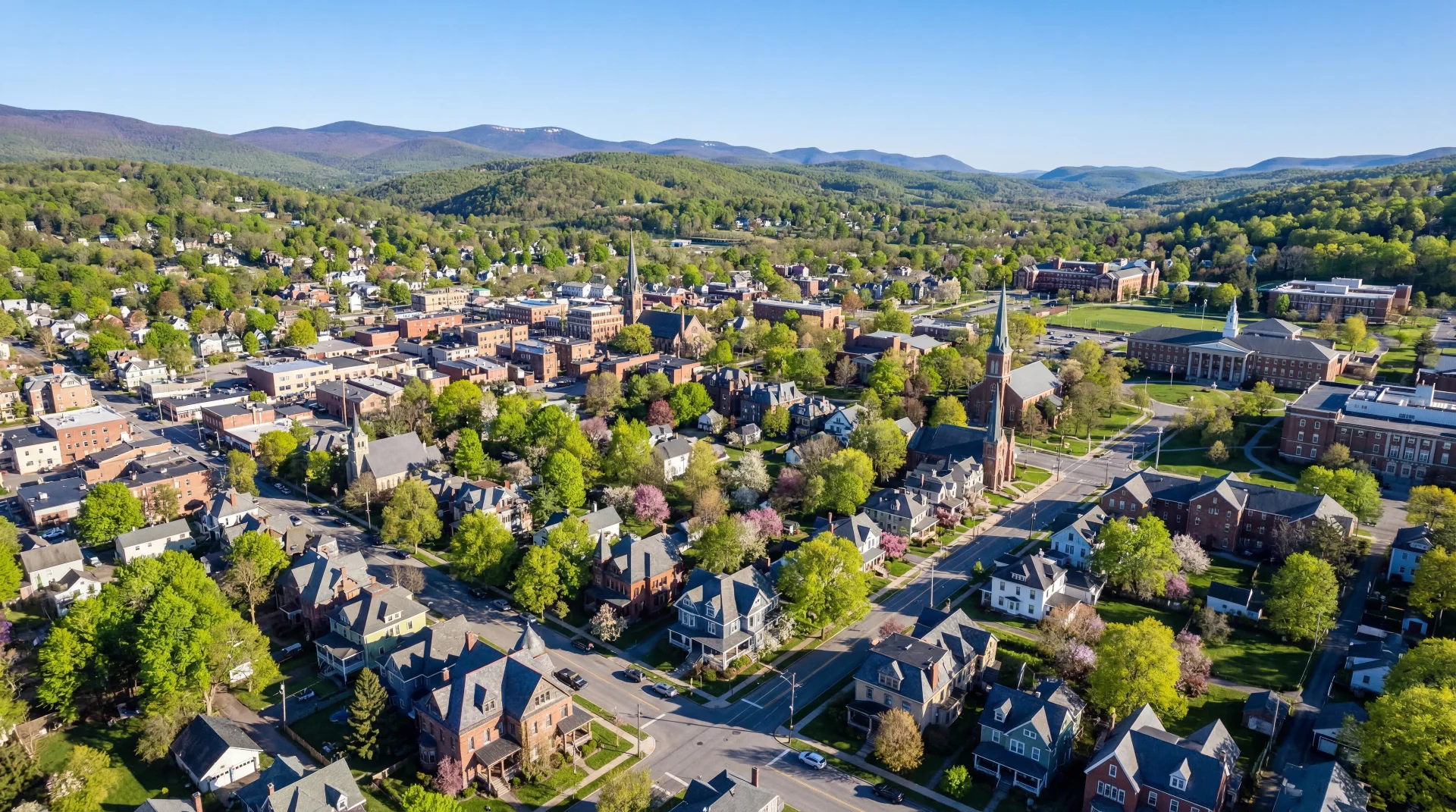
Somewhere in those hills, your next chapter is waiting.
Homes Farms and Land is not a licensed real estate agency or financial advisor. The pricing estimates, tax comparisons, and neighborhood descriptions in this guide are based on publicly available 2026 market data and are intended for informational purposes only. Always consult a licensed real estate professional and/or financial advisor before making purchasing decisions. We have no affiliation, sponsorship, or financial ties with any businesses, organizations, or services mentioned in this post unless explicitly stated.
Tagged
Keep Reading
Hand-picked articles you might enjoy next.
 Communities & Lifestyle
Fireworks & Summer Fun in Otsego, Schoharie & Chenango
From fireworks over Otsego Lake to the Sunshine Fair and Norwich's fairgrounds show, here's where to celebrate summer across three Upstate NY counties.
 Selling & Market
148,000+ Eyes on Your Upstate NY Listing Every Month
Selling a home, farm, or land in Upstate NY? See how HFL puts each listing in front of 148K+ monthly buyer touchpoints across six channels.
 Property Spotlights
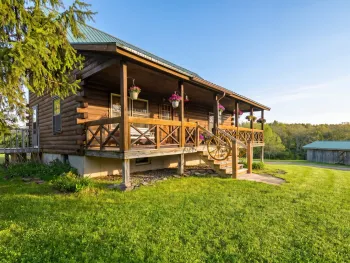
1721 County Hwy 14: 30-Acre Hartwick Log Home Sanctuary
1721 County Highway 14, Hartwick: a 2002 log home on 30.05 private acres in Otsego County. Year-round homestead or seasonal escape near Cooperstown.