15 Home-Buying Myths Costing Upstate NY Buyers Real Money

HomesFarmsAndLand
Author
15 Home-Buying Myths Costing Upstate NY Buyers Real Money.
The advice you've probably already heard — fact-checked for the Catskill foothills, the market we've worked in for years.
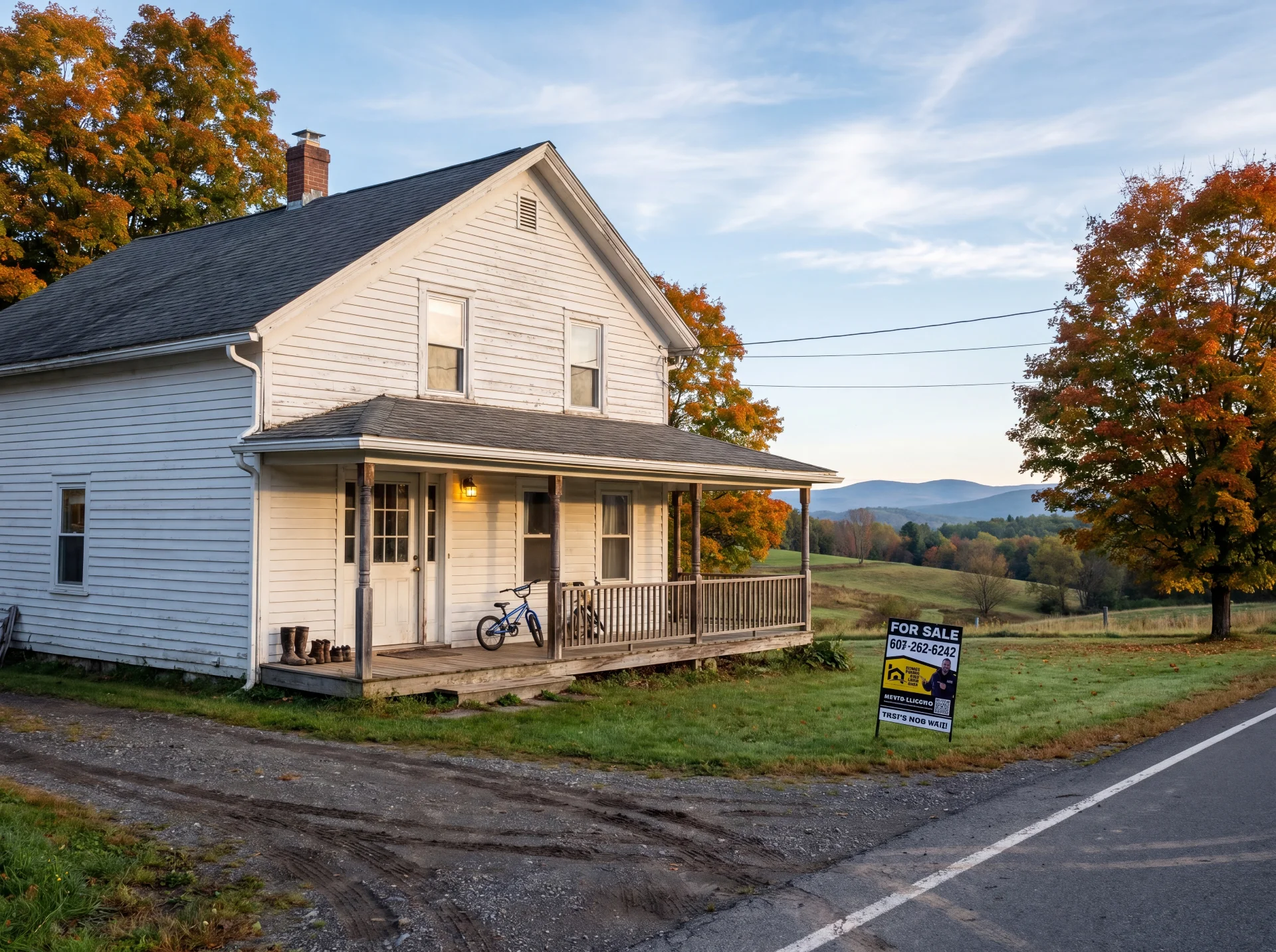
First of all, welcome. It's a good decision to be thinking this through carefully.
You've probably been handed a flood of well-intentioned advice already. Your uncle, who bought a fixer-upper in 1987. A podcast someone at work recommended. A confident comment in a Facebook group for people moving to the Catskills, or you watched way too much HGTV like us! Some of it's great. Some of it's from a different era entirely. And some of it, especially for a rural property in Otsego, Delaware, Schoharie, and Chenango County, is the kind of wrong that costs people real money.
These are the 15 we find ourselves untangling most often. Take your time with them.
Financing & Loans
You need 20% down to buy a home.
The fact: Most of the buyers we work with in Otsego and Delaware counties put down somewhere between 3% and 10%.
FHA loans start at 3.5% down. Conventional loans can go as low as 3%. USDA Rural Development loans, which cover a wide swath of our service area, including most of the countryside around Sidney, Unadilla, Franklin, and Walton, can close with zero down payment. VA loans are zero down as well, but keep in mind you will still have other closing costs. You'll pay private mortgage insurance (PMI) if you're under 20%, but waiting until you've saved $60,000 on a $300,000 house often means losing two, three, or five years of equity while rents keep climbing.
The 20% rule is a ghost from a different era. Don't let it keep you renting.
Wait until prices drop before buying.
The fact: U.S. home prices have meaningfully dropped only four times in the last 80 years.
Timing the market is a game where the house almost always wins. In our corner of Upstate New York, where inventory is already tight, and out-of-state buyers keep discovering the Catskill foothills, "waiting for the dip" usually means watching homes appreciate while you pay someone else's mortgage through rent. If a home checks the boxes and the monthly payment works for your budget today, that's the better question to answer.
Buy your forever home, or don't buy at all.
The fact: If you wait until you can afford a restored four-bedroom farmhouse on 30 acres with a usable barn, you may never buy.
A $220,000 starter home in Sidney or Oneonta that you own for five years and then sell, rolling the equity into a bigger place, will almost always beat five more years of renting. The only real caution: if you already know you'll outgrow a home within two or three years, selling costs may eat your equity. Five-plus years is the general sweet spot.
Shop for homes first, get the loan later.
The fact: Most sellers in our market won't even let you through the door without a pre-approval letter or proof of funds.
This is something that's shifted noticeably in the last few years. Sellers and their listing agents are protective of their time, and rightly so. Every showing means a house has to be cleaned, kids and dogs need somewhere to go, and a family has to leave their home for an hour. They're not going to do that for someone who's "just curious" or "seeing what's out there." Before we schedule a showing, the listing agent almost always asks us for your pre-approval or proof of funds upfront.
When the right home hits the market in Otsego, Delaware, Schoharie, or Chenango County, it can be gone within days. Buyers without pre-approval in hand often don't get to see it in time. By the time they've scrambled to get their paperwork together, the house is already under contract with someone who was ready.
Get your pre-approval before you start looking, not after you find the one.
Your pre-approval rate is the rate you'll close at.
The fact: Interest rates move daily. Your pre-approval rate is a snapshot.
Your real rate locks when you go under contract, and your lender sets the lock, and it can be higher or lower than what you were quoted weeks earlier. Ask your loan officer how long your rate lock will hold; most are 30, 45, or 60 days. If your closing drags, you may need to pay to extend it.

A 30-year fixed is always the best choice.
The fact: For many buyers, yes. But not everyone.
A 15-year fixed can save you six figures in lifetime interest if your budget can handle the higher monthly payment. An adjustable-rate mortgage (ARM) can make real sense if you know you'll move or refinance within 5 to 7 years, common for starter-home buyers who plan to trade up. Ask your lender to run all three scenarios, so you're choosing the loan, not defaulting to it.
You need excellent credit to qualify.
The fact: Good loans are available to people with less-than-perfect credit.
FHA loans can approve buyers in the mid-500s. Conventional loans typically want 620+. USDA rural loans, which are a huge deal for our area, generally require a 640 credit score. Perfect credit is not the bar; responsible credit use is.
Here's the counterintuitive part: if you've spent your whole life paying cash for everything, you may actually have a harder time qualifying than someone with a modest, on-time credit card history. Lenders want to see you can handle credit — not that you've avoided it.
If you remember nothing else from this first stretch: call a local lender, get pre-approved, and let go of the 20% down rule. Those three moves put you ahead of most of the buyers we see.
Timing & The Market
Fall and winter are terrible times to buy.
The fact: Our favorite season to buy in Upstate New York is winter.
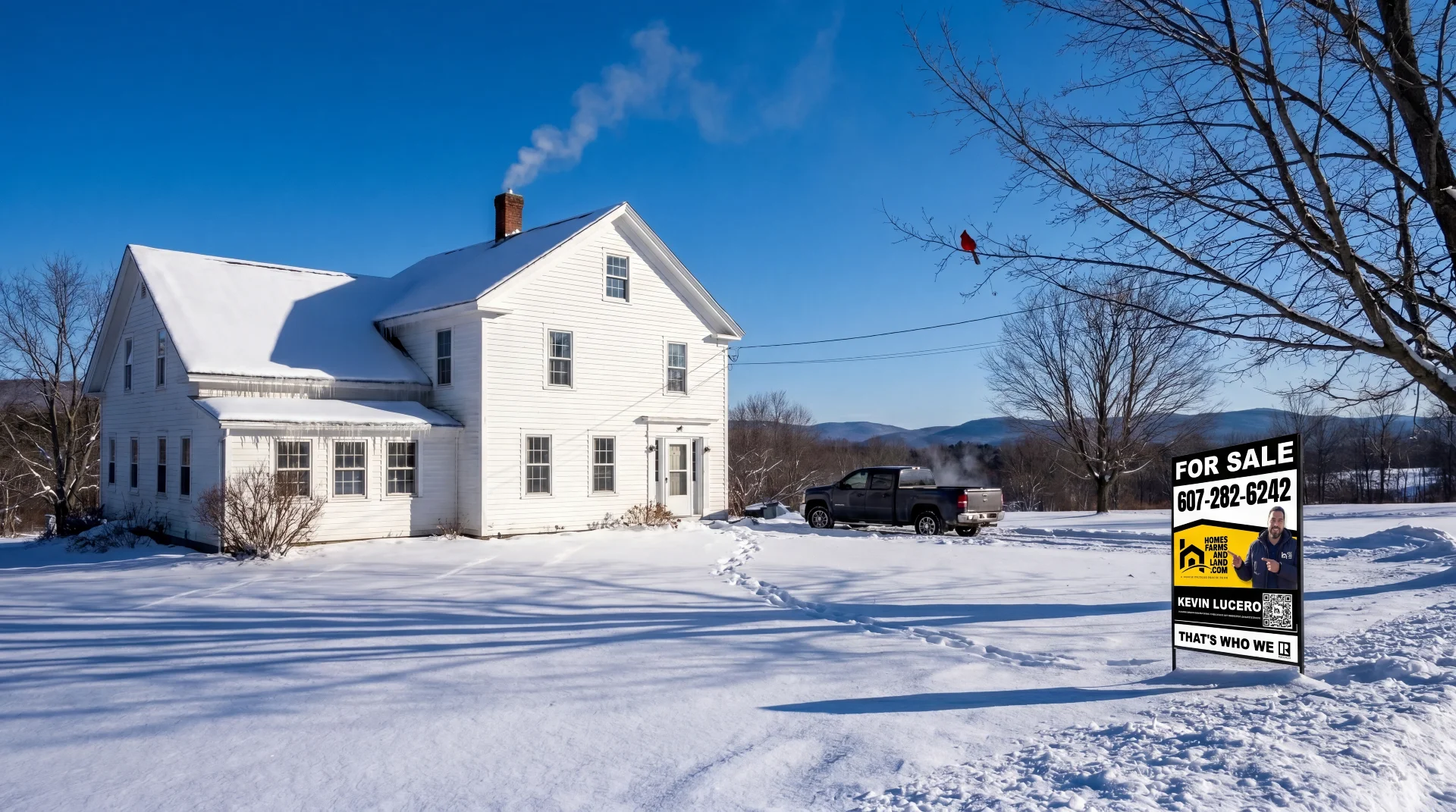
Here's why. Listings thin out. Casual buyers disappear. The sellers still on the market in January are almost always motivated — often juggling two mortgages, a job relocation, or a life change that won't wait for spring.
There's also a practical reason: you see a property at its worst. Snowy driveway, bare trees, exposed foundation, frost heaves in the road, real furnace performance. If the house looks good in a Schoharie County February, it'll feel incredible in May.
Fixer-uppers save money.
The fact: Sometimes. Not usually. And HGTV is lying to you.
Our region is full of beautiful 100-plus-year-old farmhouses that look affordable until you actually price out the work. A new roof runs $15,000 and up. A well replacement is $8,000 to $15,000. A septic upgrade — which may be triggered by a failed Perc test — can hit $10,000 to $30,000, easily. Then add knob-and-tube rewiring, spray-foam insulation for a home that currently has none, and whatever the chimney liner situation turns out to be.
Before you fall in love with a price tag, get real contractor quotes on the big-ticket items. Not "I bet my brother could do it." Actual written estimates from licensed local tradespeople.
If a home's been sitting, something's wrong with it.
The fact: Days on market behaves differently in a rural market than it does in Brooklyn or Albany.
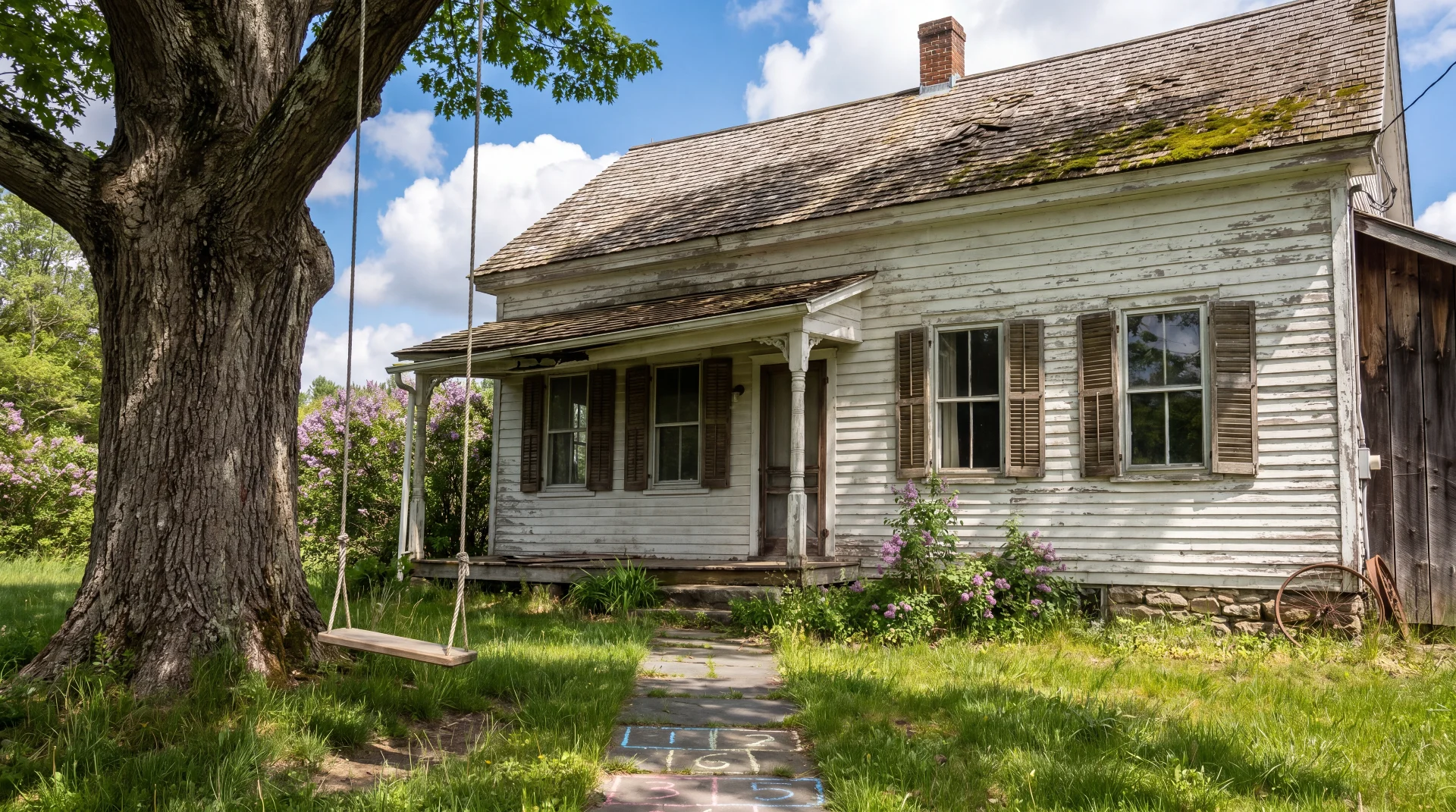
A well-priced home in Hartwick or Morris might sell in a week. A beautifully priced 80-acre parcel in rural Schoharie County can legitimately sit for six months — not because anything is wrong with it, but because the pool of buyers for 80 acres is simply smaller than the pool for a 3-bedroom in a village.
Long DOM is a question, not a verdict. Ask your agent to dig into why.
"In the last three years alone, our team has closed millions in Upstate New York real estate. The buyers who win are the ones who ignore the national narrative and play the local game."
Kevin Lucero · Team Lead

Offers & Negotiation
Asking price is the price.
The fact: Asking price is the seller's opening move, not the final answer.
Your agent should pull comps, recently sold, truly comparable homes in your submarket, and help you write an offer that reflects actual value. Sometimes that's below asking, sometimes at asking, and in competitive situations, sometimes above. In a multiple-offer scenario, how your offer is structured (earnest money, contingency timelines, closing flexibility) often matters more than the top-line number.
Sellers always cover closing costs.
The fact: They sometimes do. They also sometimes don't.
In a buyer's market (more homes than buyers), seller concessions toward closing costs are common and reasonable to ask for. In a seller's market, which plenty of pockets in Otsego, Delaware, and Madison County have been over the past few years, asking for closing-cost help can make your offer measurably weaker than another buyer's offering the same price without concessions. Your agent should read the submarket and advise accordingly.
Closing costs — what to budget.
For buyers in our region, closing costs typically run 2% to 4% of the purchase price, including:
01Loan origination fees
02Title insurance and title search
03Appraisal ($500–$800)
04Home inspection ($400–$700)
05Prepaid taxes and insurance escrow
Inspections & The Unknown
Skip the inspection to make your offer stronger.
The fact: We understand the instinct. We will also tell you, gently but clearly, that it's one of the most expensive mistakes a buyer can make up here.
Waiving the inspection on a 120-year-old Upstate farmhouse with a questionable septic, a dirt-floor cellar that may or may not be dry, and a mystery wood-boiler setup is how buyers end up writing $40,000 surprise checks six months after closing.
A better strategy: do the inspection, but go in with shorter contingency timelines, a pre-inspection if the seller allows, and a commitment not to nickel-and-dime the seller on minor findings. That gets you most of the seller-appeal of a waived inspection without the financial risk.
A standard inspection covers the well and septic.
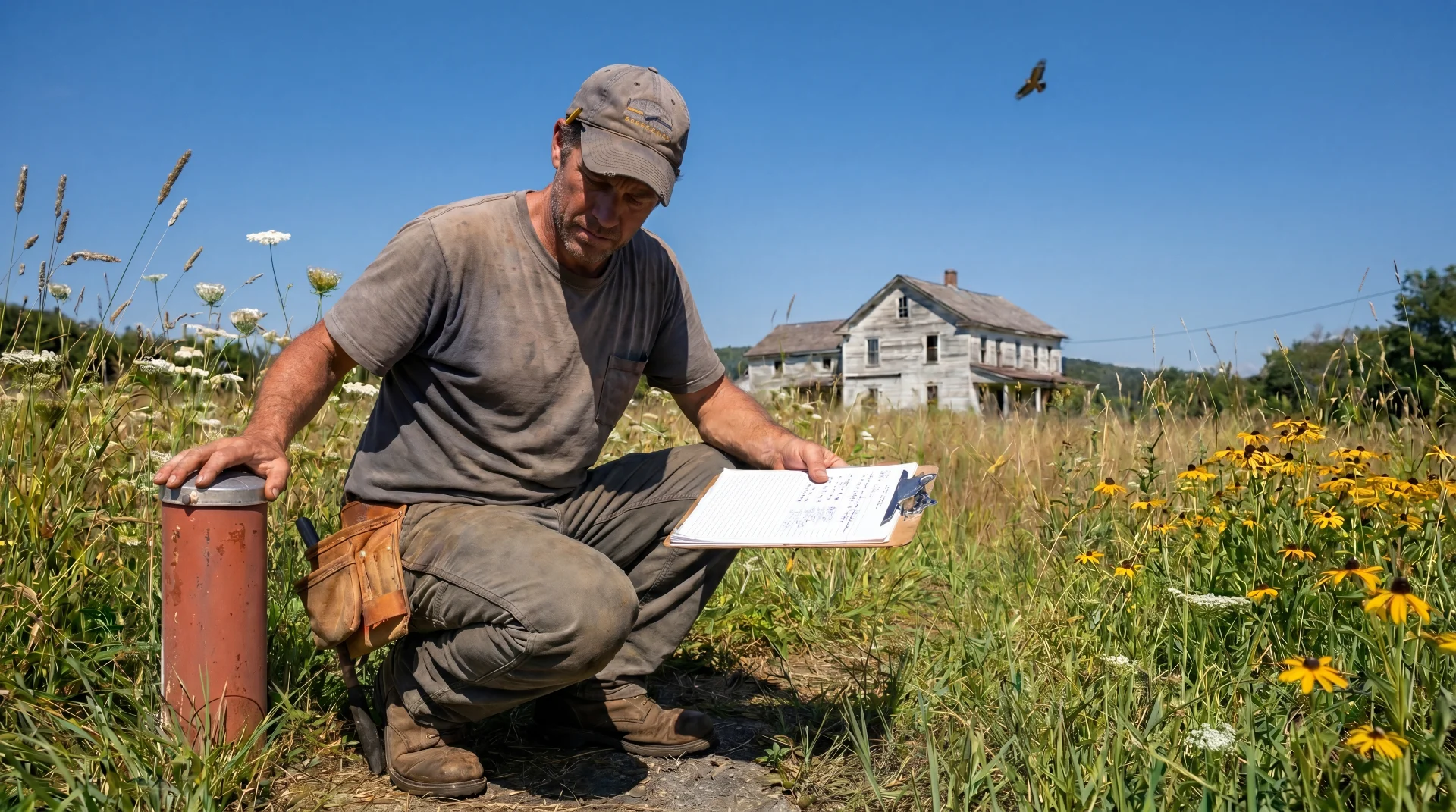
The fact: It does not. This one is hyper-critical for rural buyers and we see it missed constantly.
A standard home inspection looks at the house — roof, structure, HVAC, electrical, visible plumbing. It does not include a well yield and pressure test, it does not include a septic dye test or tank inspection, and it does not include water quality lab testing.
For any rural property in our region, you want all three as separate services. Budget roughly $500 to $1,000 total. It's the cheapest insurance you'll ever buy.
A buyer's agent is always free to the buyer.
The fact: Not anymore. The 2024 National Association of Realtors settlement changed how buyer's agent commissions are structured, and it's still causing confusion in 2026.
Under the current rules, buyers must sign a written buyer's agency agreement before touring homes. That agreement lays out exactly how your agent gets paid — a percentage of the purchase price, a flat fee, or in some cases an hourly rate. Sellers can still offer to cover the buyer's agent commission (and many still do in our region), but it's no longer automatic and is a negotiable part of every offer.
The practical takeaway: when you interview an agent, ask them directly how they get paid, what the agreement commits you to, and how they handle listings where the seller isn't offering buyer-side compensation. A good agent will walk you through it without flinching.
Buying up here is different than buying in a city.
Most of the "wisdom" out there was written for someone else's market. Ask local questions. Get local answers.
Your place out here is waiting.
Kevin Lucero and the Homes Farms and Land team have walked hundreds of buyers through the Catskill foothills — from first-time starter homes in Oneonta to 100-acre parcels in Delaware County.
Talk to an Agent17+ Years Experience · Award-Winning Agent · 500+ Families Served
Kevin Lucero is a Licensed Real Estate Salesperson and Team Lead at Homes, Farms, and Land, serving the Catskill foothills across Otsego, Delaware, Schoharie, Chenango, and Greene counties. SFR® Certified with 17+ years of experience as a realtor, starting in California, now Upstate and Central New York, Kevin hosts a YouTube channel with 11K+ subscribers covering Upstate New York, where you can see amazing listings as he brings them to market!
The Homes, Farms, and Land team at Charlotteville Realty is led by Kevin Lucero, a licensed real estate salesperson, and is not a licensed appraisal firm, legal advisory firm, or mortgage lender. The information in this article is for general educational purposes and is not intended as legal, financial, tax, or lending advice. When considering any loan, mortgage, or financial product, consult a licensed professional. Third-party services and examples referenced in this article are not affiliated with Homes Farms and Land unless explicitly stated.
Data sources: Otsego-Delaware Board of REALTORS®, Homes.com, Zillow.
Tagged
Keep Reading
Hand-picked articles you might enjoy next.
 Buying Guides
What Smart Buyers Do With One Showing
Only get one chance to see a property? Here's how Upstate NY buyers prepare for a single showing and leave with everything they need to make an offer.
 Land & Building
What to Know Before Buying Country Property in Upstate NY
Zoning, septic, wells and legal road access decide whether Upstate NY land works. The checklist for Otsego, Delaware and Schoharie county buyers.
 Property Spotlights
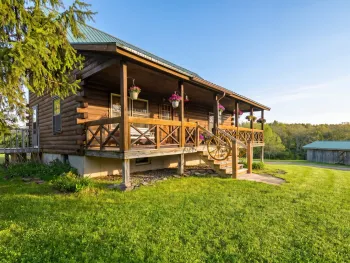
1721 County Hwy 14: 30-Acre Hartwick Log Home Sanctuary
1721 County Highway 14, Hartwick: a 2002 log home on 30.05 private acres in Otsego County. Year-round homestead or seasonal escape near Cooperstown.